整合式下睑成形术量化分类与评估
2026年9月11日29 min read
Plastic and Reconstructive Surgery Global Open
Backgrounds:Lower eyelid bag deformities exhibit considerable variation among patients, necessitating tailored approaches rather than a standardized procedure. This study aimed to establish a clinical grading system and develop an integrated surgical strategy for Asian patients to achieve personalized and satisfactory outcomes in lower blepharoplasty.
Methods:Between January 2021 and June 2024, a total of 504 patients with grade I–III lower eyelid deformities underwent a combined procedure involving transconjunctival orbital fat removal, minced orbital fat grafting, and skin excision. Preoperative and postoperative photographs, patient satisfaction, aesthetic improvement, complications, and statistical evaluations were analyzed.
Results:The cohort included 90 patients with grade I, 301 with grade II, and 113 with grade III deformities. Overall patient satisfaction was high (4.456 ± 0.22), with the highest scores observed in grade III patients. The total aesthetic improvement score was 90.98 ± 2.23, with grade II patients demonstrating the most significant enhancement. More severe deformities were associated with lower AC/AB ratios, higher AG/AB ratios, and greater ∠GOH. Preoperative values of AC/AB (>0.82), ∠EDO (>7.79), AF/AB (>2.53), and ∠GOH (>18.65) were predictive of marked aesthetic improvement following surgery.
Conclusions:Successful lower blepharoplasty relies on precise preoperative assessment and individualized planning. Through a quantitative clinical grading system (grades I–III based on our FTS staging framework) and a personalized integrated surgical strategy, we observed generally satisfactory outcomes in Asian patients with varying presentations of lower eyelid bag deformities. Preoperative quantitative assessment may help standardize clinical description and guide surgical planning, thereby facilitating expectation management regarding potential aesthetic improvement.
Lower blepharoplasty is a frequently performed aesthetic procedure, yet achieving optimal outcomes remains challenging due to the complex and varied anatomical presentations of lower eyelid aging. Key manifestations often include orbital fat prolapse, tear trough depression, and skin laxity with static wrinkling. 1 Accurately classifying these deformities has been complicated by difficulties in quantifying the severity of orbital fat herniation and skin redundancy. 2 Various classification systems have been proposed for lower eyelid bag deformities. Barton et al 3 categorized preoperative and postoperative outcomes into 3 degrees based on the severity and extent of the lid–cheek junction, whereas Hirmand 4 focused on periorbital volume loss to classify deformities. Sadick et al 5 introduced a scoring system integrating tear trough depth, pigmentation, rhytids, and fat prolapse, and Mao et al 6 later graded deformities by combining volume deficiency, eye bags, and skin laxity. However, some of these systems focus predominantly on a single aspect of the deformity or are based on subjective clinical assessment, which may vary among observers. A clear, objective classification system is essential to guide surgeons in formulating precise and individualized surgical strategies for lower blepharoplasty.
The traditional transcutaneous lower blepharoplasty, involving excision of skin, muscle, and fat via a subciliary incision, effectively reduces tissue excess but carries risks of lid retraction and ectropion. 7 , 8 The transconjunctival approach preserves orbicularis oculi integrity, reducing these risks, 9 , 10 yet it cannot address significant skin redundancy. In recent years, a bilamellar approach has gained acceptance, particularly among Asian surgeons, due to its favorable safety profile and aesthetic outcomes. 6 , 11 – 13 This technique combines transconjunctival access for fat management with a separate subciliary approach for skin and muscle adjustment. Despite these refinements, no single surgical technique can adequately address the full spectrum of lower eyelid deformities. Many patients still receive generalized, rather than individualized, surgical plans—often overlooking specific anatomical characteristics and leading to suboptimal results. Therefore, the development of integrated surgical strategies, tailored to distinct clinical classifications, is essential to optimize outcomes in lower blepharoplasty.
Hence, this study introduces a novel 3-tier grading system (grades I–III) for lower eyelid bags, termed the FTS framework, based on 3 key anatomical components in Asian patients: F , orbital fat prolapse; T , tear trough depression; and S , skin laxity. Corresponding to each grade, we have developed an integrated surgical strategy for lower blepharoplasty that combines 3 targeted techniques: transconjunctival orbital fat removal, minced orbital fat grafting, and skin excision. Furthermore, we sought to identify whether specific preoperative objective measurements of the eye and lower eyelid morphology could reliably predict significant postoperative aesthetic improvement. The establishment of such quantitative predictive assessments could assist both patients and surgeons in forming realistic and well-informed expectations regarding surgical outcomes.
We retrospectively evaluated an integrated surgical strategy for lower blepharoplasty in patients with varying grades of lower eyelid bag deformity. All consecutive eligible patients treated between January 2021 and June 2024 were included. The study cohort consisted of 504 patients who met the inclusion criteria. Data encompassed age, sex, and periocular surgery history. Exclusion criteria included age older than 70 years with severe eyelid laxity but minimal fat prolapse, as these characteristics were unsuitable for a transconjunctival approach. The study was approved by the institutional ethics committee and adhered to the Declaration of Helsinki. All participants provided informed consent and authorization for image use.
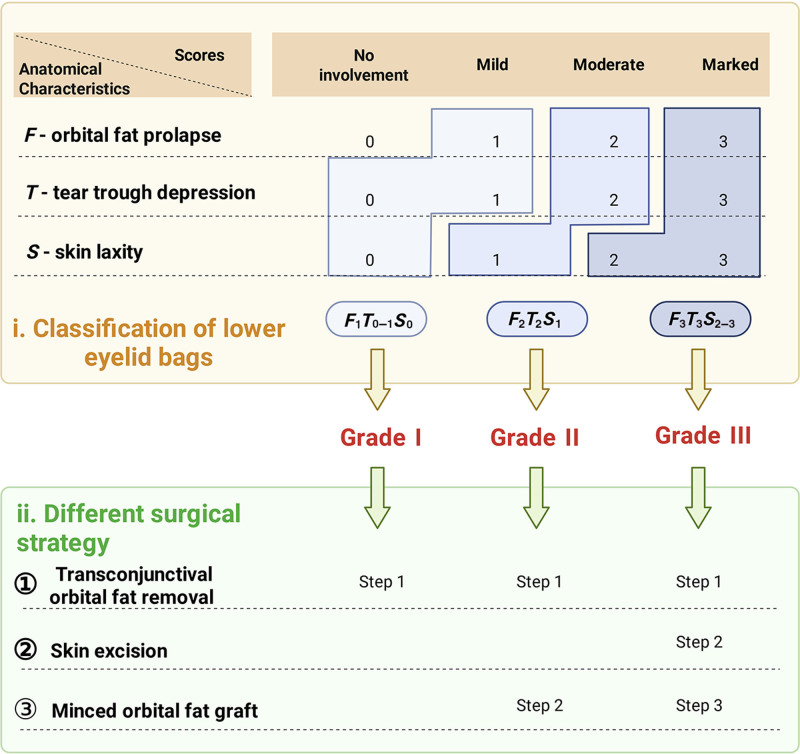
A 2-stage preoperative planning framework was established to guide surgical strategy in lower blepharoplasty. First, patients were classified into grades I–III based on the FTS staging system, which quantifies 3 anatomical components of lower eyelid deformity: orbital fat prolapse ( F ), tear trough depression ( T ), and skin laxity ( S ). Each component was scored from 0 (none) to 3 (marked). Second, a graded surgical approach was applied according to the FTS classification, comprising 3 potential procedures: transconjunctival fat removal, skin excision, and minced orbital fat grafting (Fig. 1 ).
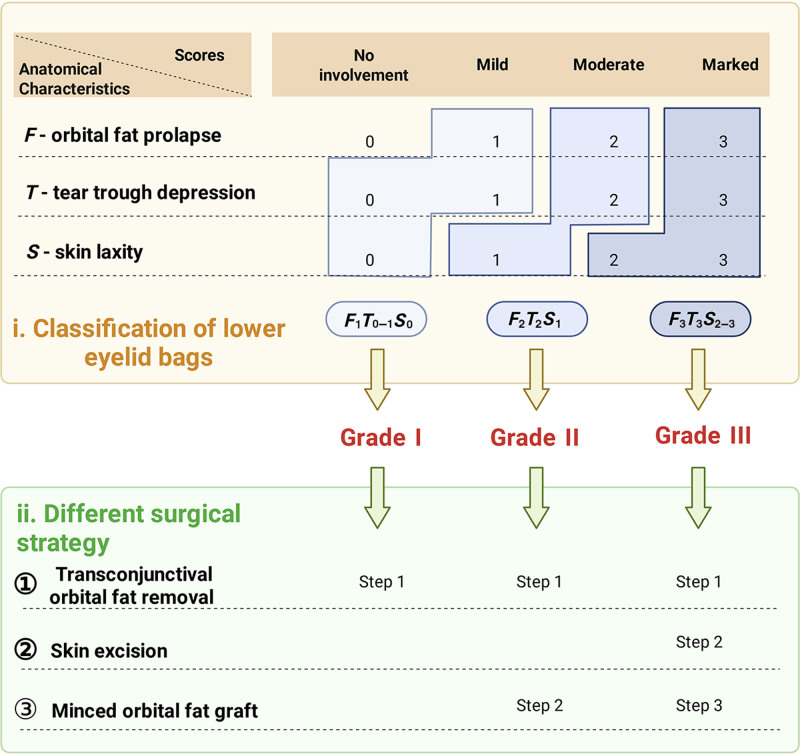
Fig. 1. Patients with different classifications of lower eyelid bags (grade I–III) underwent different surgical strategies for lower blepharoplasty.不同分度(I–III)下睑眼袋对应的整合术式示意。
Standardized preoperative and postoperative photographs were taken in frontal, lateral, and 45-degree oblique views with the patient’s head upright and eyebrows relaxed. Based on these images, anatomical landmarks were identified to define objective parameters of the eye and lower eyelid bags (Table 1 ). Parameter definitions and calculations are provided in Table 2 and illustrated in Figure 2 . These parameters were used to analyze their association with deformity grades I–III and to predict the extent of postoperative improvement and prognosis.
Table 1. Definitions of the Landmarks of the Ocular Characteristics and Lower Eyelid Bags Before Surgery
| Landmarks | Definition |
|---|---|
| A | Pupillary center |
| B | The edge of the iris |
| C | The intersection of the lower edge margin at the eyelash root and the vertical line passing through point A |
| O | Medial canthus, inner commissure of the palpebral margin |
| D | Lateral canthus, outer commissure of the palpebral margin |
| E | The intersection point of the horizontal line passing through point D and the vertical line passing through point O |
| F | The intersection point of the most prominent point of orbital fat prolapse and the vertical line passing through point A |
| G | The intersection point of the tear trough and the vertical line passing through point A |
| H | The farthest (most inferolateral) point of the tear trough |
Table 2. Objective Parameters of Eye Characteristics and Lower Eyelid Bags Before Surgery
| Parameters | Definition |
|---|---|
| AC/AB | Degree of lower eyelid exposure |
| DE/AB | Degree of eyelid width |
| ∠EDO | Intercanthal angle (15) |
| AF/AB | Degree of orbital fat prolapse |
| AG/AB | Degree of tear trough depression |
| ∠GOH | Width of tear trough depression |
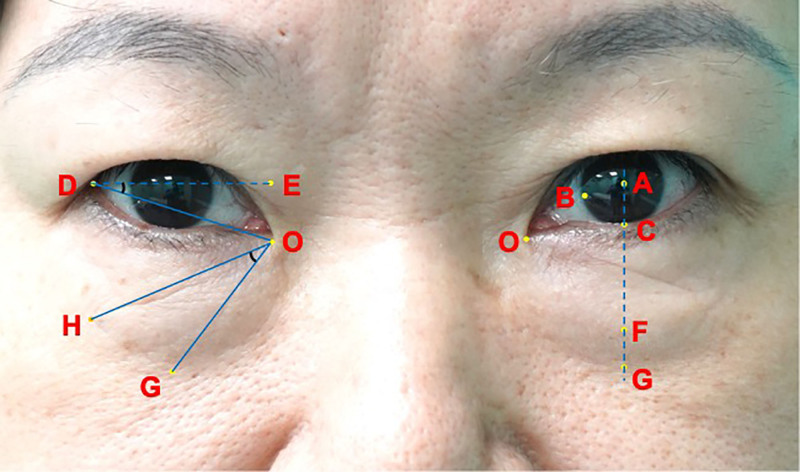
Fig. 2. Image showing the 9 landmarks of ocular anatomy in 2 dimensions, which presented objective parameters of lower eyelid bags before surgery.眶周 9 个二维解剖标志点,用于术前量化下睑眼袋参数。
Patients were routinely evaluated at 3 and 7 days postoperatively, with extended follow-up when feasible. The follow-up duration varied among patients, ranging from 6 months to 1 year, depending on clinical availability and patient compliance. At the final visit, overall satisfaction was assessed using a 5-point Likert scale (1 = very unsatisfied to 5 = very satisfied).
For objective external validation, aesthetic improvement was evaluated by 3 independent board-certified plastic surgeons and 3 laypersons using standardized photographs. Raters scored improvement on a 100-point visual analog scale (0 = no improvement, 100 = complete improvement). 6 A score greater than 90 was defined as “remarkable” improvement for prognostic analysis.
Postoperative complications were assessed at each follow-up visit. Documented complications included lower eyelid malposition (eg, retraction, ectropion), undercorrection or overcorrection following fat grafting, granuloma formation at the conjunctival site, surgical site infection, and transient conjunctival chemosis.
Preoperatively, the location and amount of fat to be excised were evaluated with the patient seated, as supine positioning during surgery tends to mask the full extent of fat herniation. 10 All procedures were performed by a single senior plastic surgeon (J.G.). Patients with grade I, II, or III deformities underwent a different integrated surgical lower blepharoplasty strategy (Fig. 1 ).
Under local anesthesia (2 mL of 1% lidocaine with 1:200,000 epinephrine per side), a 1‑cm transconjunctival incision was made below the tarsal plate after infiltration and hemostasis. The capsulopalpebral fascia was opened with low‑power electrocautery to expose orbital fat. The central and lateral fat pads were excised, and the medial fat was managed according to tear trough severity. With gentle globe pressure, herniated fat was clamped, excised, and coagulated. Resected fat was preserved in saline for grafting. The conjunctiva was left unsutured after hemostasis (Fig. 3 ).
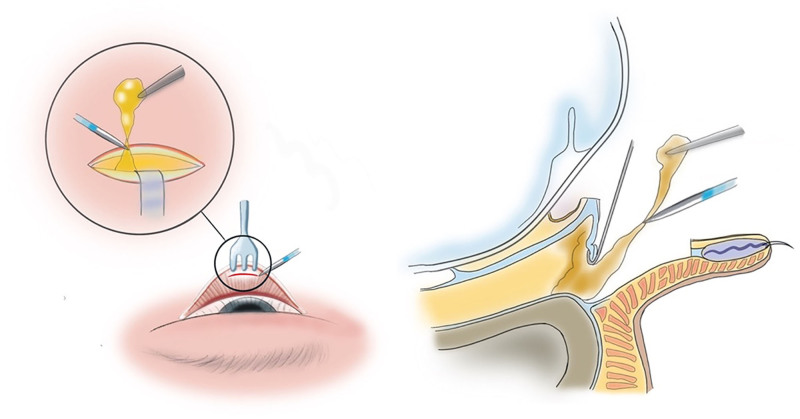
Fig. 3. Surgical procedure of transconjunctival orbital fat removal, including conjunctival incision, orbital fat pad excision, and collection of resected fat for grafting, if necessary, for grade II and III patients.经结膜眶隔脂肪去除的手术步骤示意。
Approximately 2 mL of 1% lidocaine with 1:200,000 epinephrine was injected transcutaneously. A skin incision located 2 mm below the lash line was made from below the lacrimal punctum to the lateral canthus with a slight downward tilt. After elevating a skin flap, excess skin was assessed by mouth opening and cephalad redraping, then excised without tension. The incision was closed with continuous 6‑0 nylon sutures. No lateral canthopexy was performed in Asian patients (Fig. 4 ).
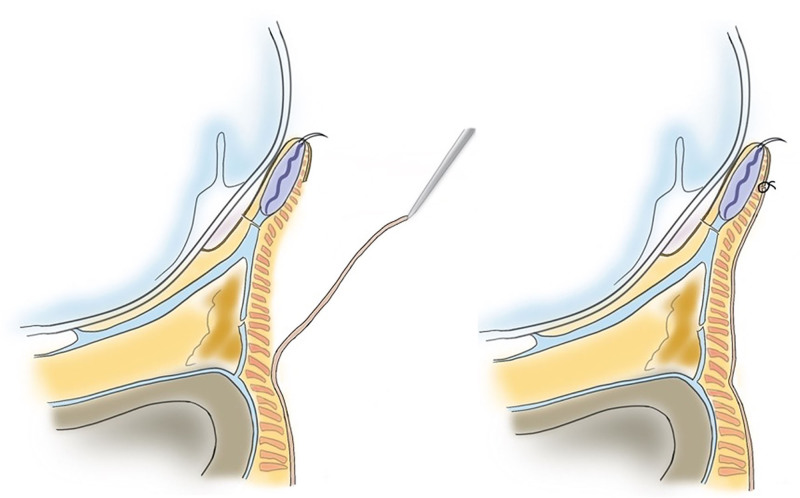
Fig. 4. Surgical procedure of transcutaneous lower eyelid surgery, including a skin incision 2 mm below the lash line, skin flap dissection, excess skin excision, and closure with a 6–0 nylon suture.皮肤切除(睑缘下 2 mm 切口)步骤示意。
Resected orbital fat was minced for more than 3 minutes and loaded into a 1-mL syringe. With the patient upright, a 0.9-mm blunt cannula was inserted 2 cm below the vertical line of the lateral canthus. The fat was injected behind the orbicularis oculi muscle and anterior to the infraorbital rim and septum along the tear trough until slight tension was achieved. The mean volume injected was 0.4 mL (0.3–0.5 mL) per side to avoid palpability and contour irregularities (Fig. 5 ).
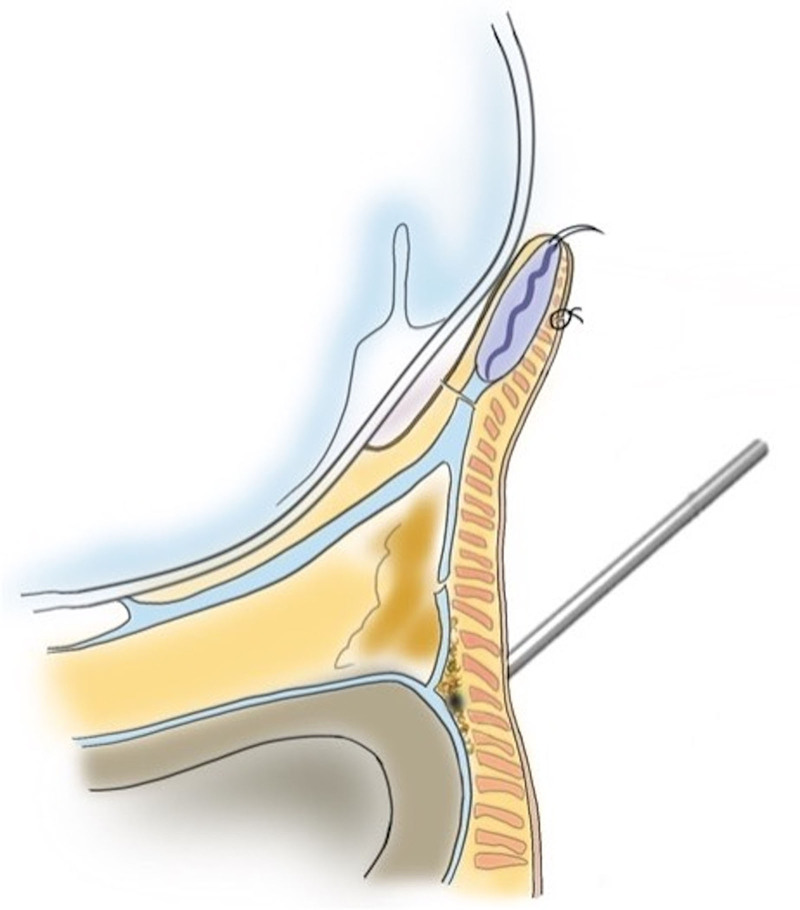
Fig. 5. Surgical procedure of minced orbital fat grafting by injecting the graft behind the orbicularis oculi muscle and in front of the infraorbital rim and septum, filling the tear trough depression until slight tension is achieved.微切碎眶隔脂肪移植至泪槽区域的步骤示意。
Immediate ice packing was applied for 30 minutes, followed by intermittent cold compresses (20–30 min every 2 h) for 2–3 days. Dressings were maintained for 3–4 days, and massage or pressure was avoided to prevent graft displacement. Patients were instructed to avoid bending for 1 week and strenuous activity for 3 weeks.
Continuous variables were compared using 1‑way analysis of variance, and categorical variables using the chi‑square test. Receiver operating characteristic (ROC) analysis identified optimal cutoffs for preoperative predictors of marked aesthetic improvement. These variables were then categorized and assessed using univariate and multivariate logistic regression, with variables showing a P value of less than 0.1 in univariate analysis entering the multivariate model. Statistical significance was set at a P value of less than 0.05. Analyses were performed with SPSS 29.0 and GraphPad Prism 10.0.
This retrospective cohort comprised 504 patients (424 women, 80 men) who underwent lower blepharoplasty from January 2021 to June 2024. According to FTS grading, there were 90, 301, and 113 patients with grades I, II, and III deformities, respectively. The mean age was 32.7 ± 8.8 years, with age increasing by grade ( P < 0.001). Concurrent procedures were performed in 41 cases, including eyebrow lift (n = 26), double eyelid plasty (n = 6), and additional facial fat grafting (n = 10).
Ocular parameter analysis revealed a significantly lower AC/AB ratio in grade III patients compared with grades I and II ( P = 0.004). In contrast, the DE/AB ratio and ∠EDO showed no significant intergroup differences. For lower eyelid bags, grade III patients had significantly higher AG/AB ratio ( P = 0.019) and ∠GOH ( P < 0.001), whereas the AF/AB ratio difference was not significant. In summary, the AC/AB ratio, AG/AB ratio, and ∠GOH were significantly associated with the FTS classification (grades I–III). Specifically, a lower AC/AB ratio, together with a higher AG/AB ratio and ∠GOH, was indicative of greater deformity severity (Table 3 ).
Table 3. Patient Demographic Data and Comparative Analysis of the 3 Grades of Lower Eyelid Bags
| Grade I, n = 90 | Grade II, n = 301 | Grade III, n = 113 | Total, n = 504 | P | |
|---|---|---|---|---|---|
| Age, y (mean ± SD) | 29.5 ± 6.4 | 29.6 ± 5.3 | 43.5 ± 9.5 | 32.7 ± 8.8 | <0.001 * |
| Sex, n | |||||
| Female Male | 7416 | 24754 | 10310 | 42480 | 0.068 |
| Objective eye parameters, mean ± SD | |||||
| AC/AB | 1.01 ± 0.14 | 1.01 ± 0.16 | 0.96 ± 0.15 | 0.99 ± 0.15 | 0.004 ** |
| DE/AB | 4.62 ± 0.58 | 4.69 ± 0.50 | 4.68 ± 0.43 | 4.68 ± 0.50 | 0.430 |
| ∠EDO, degrees | 10.49 ± 3.47 | 10.06 ± 2.99 | 9.87 ± 3.16 | 10.09 ± 3.12 | 0.355 |
| AF/AB | 2.96 ± 0.34 | 3.04 ± 0.38 | 3.05 ± 0.39 | 3.02 ± 0.37 | 0.152 |
| AG/AB | 3.76 ± 0.44 | 3.89 ± 0.48 | 3.95 ± 0.52 | 3.89 ± 0.49 | 0.019 *** |
| ∠GOH, degrees | 12.94 ± 6.59 | 19.76 ± 6.31 | 26.09 ± 8.21 | 19.97 ± 7.98 | <0.001 * |
| Patient satisfaction (1–5), mean ± SD | 4.411 ± 0.24 | 4.464 ± 0.21 | 4.469 ± 0.23 | 4.456 ± 0.22 | 0.106 |
| Aesthetic improvement (0–100), mean ± SD | |||||
| Surgeons | 91.67 ± 1.99 | 92.02 ± 1.92 | 91.65 ± 2.84 | 91.87 ± 2.18 | 0.178 |
| Laypersons | 89.96 ± 2.44 | 90.08 ± 2.57 | 90.19 ± 3.17 | 90.08 ± 2.69 | 0.833 |
| Total | 90.81 ± 1.96 | 91.05 ± 2.03 | 90.92 ± 2.86 | 90.98 ± 2.23 | 0.639 |
Patient satisfaction was high overall (4.46 ± 0.22), highest in grade III. On external evaluation, grade II showed the greatest improvement (surgeons: 92.02 ± 1.92; all reviewers: 91.05 ± 2.03), whereas grade I scored lowest, likely due to milder baseline deformity.
Complications were uncommon. Transient lower eyelid malposition occurred in 11 cases (2.18%) and resolved within 3 months. Minor graft-related issues included overcorrection (0.79%) and undercorrection (0.19%). Subcutaneous hemorrhage (2.77%) and incision redness (0.79%) were self-limited. No major complications (eg, infection or granuloma) were observed (Table 3 ).
To identify predictors of remarkable aesthetic improvement, ROC analysis established optimal cutoffs for continuous variables. Univariate and multivariate logistic regression analyses were then conducted. Based on the surgeons’ assessments, univariate analysis identified ∠EDO as a significant predictor among ocular parameters and the AF/AB ratio among lower eyelid bag parameters. Multivariate analysis confirmed that both a higher ∠EDO ( P = 0.006) and a higher AF/AB ratio ( P = 0.03) were independent predictors of remarkable improvement (Table 4 ). From the laypersons’ perspective, univariate analysis indicated that age, the AC/AB ratio, ∠EDO, AF/AB ratio, and ∠GOH were significantly associated with superior outcomes. In the subsequent multivariate model, a higher AC/AB ratio ( P = 0.031) and a higher ∠GOH ( P = 0.005) emerged as independent predictors (Table 5 ). When considering the total evaluation scores, univariate analysis highlighted the AC/AB ratio and ∠EDO as significant ocular parameters, and ∠GOH as a significant lower eyelid bag parameter. Multivariate analysis identified a higher ∠GOH ( P = 0.014) as the sole independent predictor in the final model (Table 6 ). In summary, preoperative parameters, including a higher AC/AB ratio (>0.82), ∠EDO (>7.79 degrees), AF/AB ratio (>2.53), and ∠GOH (>18.65 degrees), were significant predictors of remarkable aesthetic improvement following lower blepharoplasty.
Table 4. Univariate and Multivariate Logistic Regression Analysis of Variables Predicting Remarkable Aesthetic Improvement Based on Surgeons’ Evaluation Results After Lower Blepharoplasty
| Univariate Logistic Regression Analysis | Multivariate Logistic Regression Analysis | |
|---|---|---|
| Variables | Odd Ratio | 95% CI |
| Lower | Upper | Lower |
| Age, y (older than 28.5 y versus 28.5 y or younger) | 1.016 | 0.634 |
| Sex (female versus male) | 1.443 | 0.805 |
| Objective eye parameters | ||
| AC/AB (>0.82 versus ≤0.82) | 1.220 | 0.585 |
| DE/AB (>5.3 versus ≤5.3) | 1.532 | 0.669 |
| ∠EDO (>7.79 versus ≤7.79) | 1.993 | 1.202 |
| AF/AB (>2.53 versus ≤2.53) | 2.027 | 1.040 |
| AG/AB (>3.22 versus ≤3.22) | 1.810 | 0.870 |
| ∠GOH (>18.65 versus ≤18.65) | 1.368 | 0.864 |
Table 5. Univariate and Multivariate Logistic Regression Analysis of Variables Predicting Remarkable Aesthetic Improvement Based on Laypersons’ Evaluation Results After Lower Blepharoplasty
| Univariate Logistic Regression Analysis | Multivariate Logistic Regression Analysis | |
|---|---|---|
| Variables | Odd Ratio | 95% CI |
| Lower | Upper | Lower |
| Age, y (older than 28.5 y versus 28.5 y or younger) | 1.504 | 1.047 |
| Sex (female versus male) | 1.422 | 0.880 |
| Objective eye parameters | ||
| AC/AB (>0.82 versus ≤0.82) | 2.027 | 1.102 |
| DE/AB (>5.3 versus ≤5.3) | 1.103 | 0.628 |
| ∠EDO (>7.79 versus ≤7.79) | 1.495 | 0.977 |
| AF/AB (>2.53 versus ≤2.53) | 1.677 | 0.921 |
| AG/AB (>3.22 versus ≤3.22) | 1.052 | 0.555 |
| ∠GOH (>18.65 versus ≤18.65) | 1.722 | 1.206 |
Table 6. Univariate and Multivariate Logistic Regression Analysis of Variables Predicting Remarkable Aesthetic Improvement Based on Total Evaluation Results After Lower Blepharoplasty
| Univariate Logistic Regression Analysis | Multivariate Logistic Regression Analysis | |
|---|---|---|
| Variables | Odd Ratio | 95% CI |
| Lower | Upper | Lower |
| Age, y (older than 28.5 y versus 28.5 y or younger) | 1.151 | 0.775 |
| Sex (female versus male) | 1.337 | 0.803 |
| Objective eye parameters | ||
| AC/AB (>0.82 versus ≤0.82) | 1.672 | 0.908 |
| DE/AB (>5.3 versus ≤5.3) | 1.492 | 0.763 |
| ∠EDO (>7.79 versus ≤7.79) | 1.512 | 0.964 |
| AF/AB (>2.53 versus ≤2.53) | 1.239 | 0.659 |
| AG/AB (>3.22 versus ≤3.22) | 1.494 | 0.767 |
| ∠GOH (>18.65 versus ≤18.65) | 1.604 | 1.087 |
A 25‑year‑old woman with grade I deformity ( F 1 T 1 S 0 ) underwent transconjunctival fat removal alone, achieving high patient satisfaction (4.5 out of 5) and remarkable external improvement (93 out of 100). Recovery was uneventful with rapid edema resolution (Fig. 6 ).
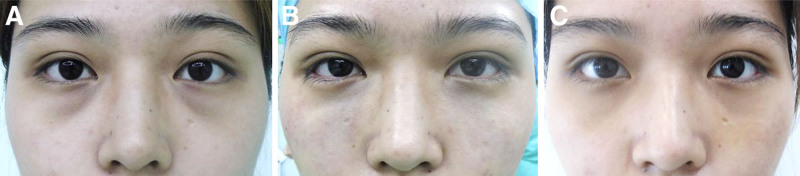
Fig. 6. A 25-year-old woman with grade I lower eyelid bags (F1T1S0) underwent the first step of lower blepharoplasty: transconjunctival orbital fat removal. A, Before the surgery. B, Immediately postoperatively. C, Seven days after the surgery.I 级病例(仅脂肪去除)术前术后示例。
A 26‑year‑old woman with grade II deformity ( F 2 T 2 S 1 ) received a 2-step procedure involving transconjunctival fat removal plus minced fat grafting. Patient satisfaction was high (4.7) with remarkable external improvement (94.5). Minor intraoperative bleeding was controlled without sequelae (Fig. 7 ).

Fig. 7. A 26-year-old woman with grade II lower eyelid bags (F2T2S1) underwent the second step of lower blepharoplasty: transconjunctival orbital fat removal and minced orbital fat grafting. A, Before the surgery. B, Immediately postoperatively. C, Seven days after the surgery.II 级病例(脂肪去除 + 脂肪移植)术前术后示例。
A 59‑year‑old woman with grade III deformity ( F 3 T 3 S 2 ) underwent a 3-step procedure: transconjunctival fat removal, skin excision, and minced fat grafting. Patient satisfaction was high (4.7) and external improvement remarkable (93). Transient subcutaneous hemorrhage and incision redness resolved completely (Fig. 8 ).

Fig. 8. A 59-year-old woman with grade III lower eyelid bags (F3T3S2) underwent the third step of lower blepharoplasty: transconjunctival orbital fat removal, skin excision, and minced orbital fat grafting. A, Before the surgery. B, Immediately postoperatively. C, Seven days after the surgery.III 级病例(三步法)术前术后示例。
Lower blepharoplasty is a prevalent aesthetic procedure, yet anatomical diversity challenges the efficacy of a uniform approach. To overcome this limitation, we established a standardized workflow for lower blepharoplasty (Fig. 1 ). Firstly, we established the quantitative FTS staging system, analogous to the TNM staging system in oncology, which stratifies lower eyelid bags into 3 key components: F , orbital fat prolapse; T , tear trough depression; S , skin laxity. Subsequently, this profile determines a preoperative grading system (grade I–III), which directly informs the choice of an integrated surgical strategy. By systematically scoring each component, the FTS grading system standardizes deformity classification, which may help guide appropriate surgical selection and enhance communication, especially for less-experienced surgeons. It serves as a flexible framework adapted to surgeon experience and individual anatomy.
For the integrated surgical strategies and procedures, we followed the principle that less is better than more:
Our findings demonstrate that minced orbital fat grafting is an effective and safe approach for correcting tear trough depression, yielding high satisfaction among both patients and surgeons without increasing complication rates. Although fat repositioning and free fat grafting from distant donor sites are also commonly used for this purpose, minced orbital fat grafting offers several distinct advantages:
In this study, 2 complementary statistical assessments were performed. First, chi‑square analyses showed that a lower AC/AB ratio, a higher AG/AB ratio, and a larger ∠GOH were associated with increasing clinical severity (grades I–III) of lower eyelid bag deformity, providing an objective reference for consistent classification and surgeon–patient communication. Second, ROC and logistic regression analyses indicated that several preoperative parameters (AC/AB > 0.82, ∠EDO > 7.79 degrees, AF/AB > 2.53, and ∠GOH > 18.65 degrees) were associated with a higher likelihood of marked postoperative improvement. These thresholds, as supportive guidance, may assist in preoperative counseling and expectation management between surgeons and patients.
However, this study has several limitations. (1) As a retrospective, single‑center study performed by a single senior surgeon, it is subject to selection and performance bias, limiting generalizability. Outcomes were partly subjective despite standardized scales, and the lack of randomization allows potential confounding. Prospective, multicenter studies with independent assessment are needed to address these issues. (2) The absence of a control group prevents direct comparison with alternative techniques. Therefore, the findings are primarily descriptive, and future prospective comparative studies (eg, matched cohorts) are needed for validation. (3) Variable follow‑up duration limits the assessment of long‑term outcomes and late complications. Future studies with standardized follow‑up would strengthen reliability. (4) Although measurable anatomical parameters were used, the FTS classification remains partly subjective. Complete objective imaging modalities, such as 3-dimensional scanning, are warranted to further substantiate the grading system and its role in guiding surgical strategy.
This study presents a novel classification system (grades I–III) for lower eyelid bags in Asian patients, based on the FTS staging framework. Based on this classification, we developed an integrated surgical strategy tailored to the anatomical deformities specific to each grade. The system offers a quantitative and reproducible tool to guide surgical planning and improve interdisciplinary communication.
Quantitative analysis confirmed that lower AC/AB ratios, higher AG/AB ratios, and greater ∠GOH values were significantly associated with more severe grades of deformity. Moreover, preoperative parameters (including AC/AB >0.82, ∠EDO >7.79 degrees, AF/AB >2.53, and ∠GOH >18.65 degrees) demonstrated discriminatory value for identifying patients more likely to achieve marked postoperative aesthetic improvement in our cohort. Collectively, these quantitative indicators may help inform preoperative counseling and guide individualized surgical planning while keeping patient preferences central to decision-making.
The authors have no financial interest to declare in relation to the content of this article. This work was supported by the Shenzhen Science and Technology Program under grant number JCYJ20230807142202004.
Patients provided written consent for the use of their images.
循证层面:本文为单中心、单术者回顾性队列(倾向 IV 级证据),样本量可观(504 例)并给出量化分期与分级,但缺少随机对照,满意度与美学改善含主观评分成分,结论适合作为临床参考框架而非疗效对照证据。
局限与注意:仅纳入亚洲人群、由同一位高年资术者操作,术式推广须考虑术者学习曲线;脂肪移植存在矫正不足/过度、肉芽肿等并发症,须规范取材与注射层次(睑袋脂肪颗粒注射于眼轮匝肌后、眶缘前)。
落地提示:FTS 分期(F/T/S 各 0–3)与 I–III 级分级可作为下睑成形术前量化评估与医患沟通的通用语言;术前 AC/AB、∠EDO、AF/AB、∠GOH 阈值有助于筛选更可能获得显著改善的病例并管理预期,推荐作为亚洲下睑美学手术的评估参考。
声明:中文精读 · 仅供学术参考。内容来自公开文献检索,不代表本人观点,不构成诊疗建议。 医疗美容需在正规医疗机构由执业医师实施。
基于相同主题推荐 · 继续深挖
背景:下睑眼袋解剖表现差异大,单一术式难以满足个体化需求,需量化分期与分级以指导手术规划。
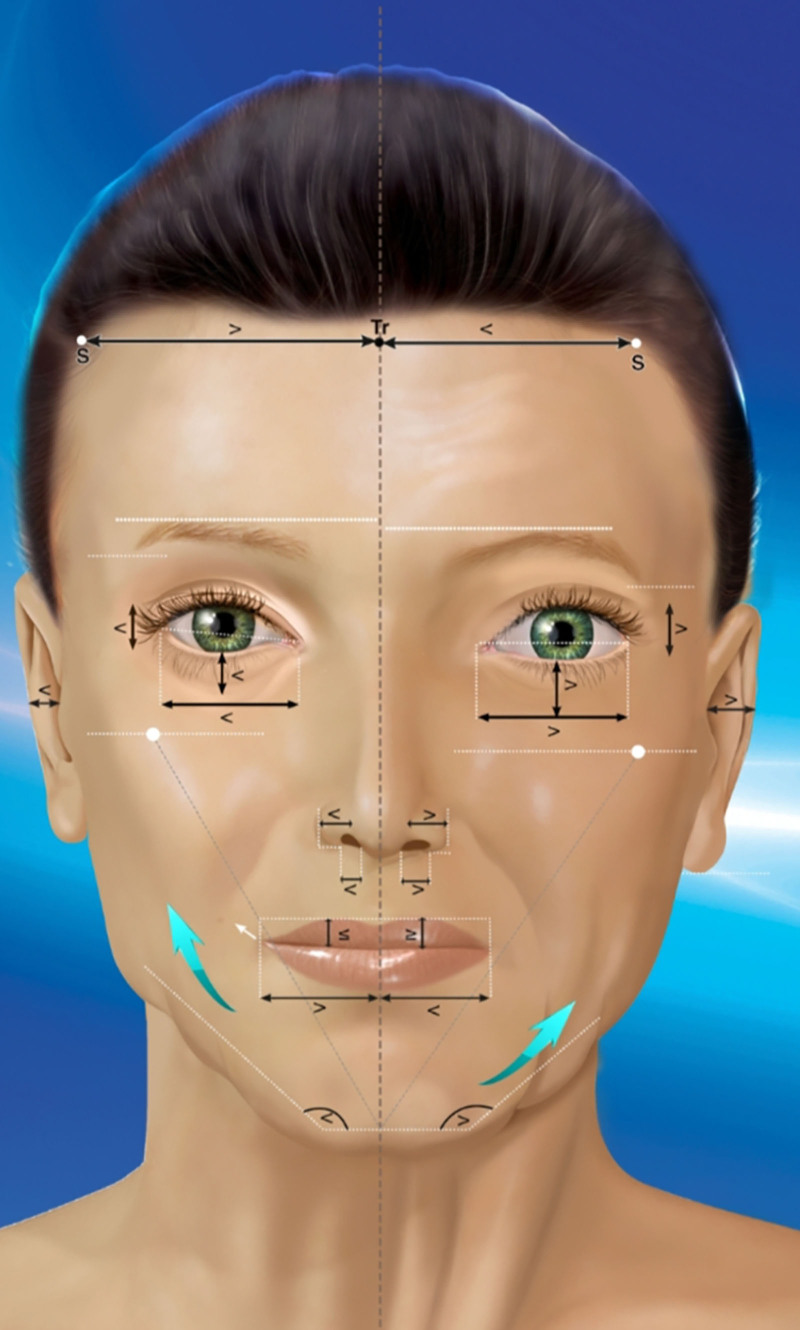
背景:传统颈部年轻化(吸脂、颈阔肌成形、皮肤再铺)忽略了下颌-颈 intrinsic 不对称、二腹肌插入、颈阔肌不连续、颌下腺下垂与年龄相关舌骨后移——这些共同决定颏下轮廓,需要三
术式定位:作者提出「保留性除皱术(Conservation facelift)」,本质是一种以「中面(mesoface)」脂肪室为单位、有限剥离的深平面除皱(deep plane