肉毒毒素Mephisto征预测与预防临床手法
2026年9月8日8 min read
Journal of Cosmetic Dermatology
Keywords: adverse effects、botulinum toxin、cosmetic techniques、eyebrows、Mephisto sign
To the Editor,
Botulinum toxin is a widely preferred, safe, and effective treatment option in aesthetic dermatology for the correction of forehead, glabellar, and periorbital wrinkles [ 1 ]. However, several complications may occur after injection, leading to patient dissatisfaction from an aesthetic perspective. One such complication is the Mephisto sign, which is characterized by a conspicuous elevation of the lateral eyebrows following botulinum toxin injections into the forehead [ 2 ]. This phenomenon may result from suppression of the central or medial frontalis muscle by the toxin, leaving the lateral fibers relatively more active [ 2 , 3 ]. It may occur after central forehead treatment and may also be facilitated by unintended diffusion from glabellar injections into the medial frontalis region. The resulting appearance is frequently interpreted as a “surprised” or “malicious” expression, often prompting corrective injections.
In clinical practice, this complication is usually addressed preventively by applying a low dose of toxin bilaterally to the lateral frontalis region to balance muscle activity [ 2 ]. Nevertheless, this approach is not always sufficient for all patients. Human facial musculature varies substantially between individuals: in some, the lateral fibers are markedly dominant, while in others they are less active compared to the medial portion. Differences in forehead height, baseline brow position, frontalis strength, and sex‐related anatomy may further influence treatment outcomes. These variations may be particularly relevant in male patients, in whom lateral frontalis activity may be stronger or extend more superiorly. Such anatomical and functional variations may render standard injection protocols ineffective in certain cases. Therefore, a simple method that enables clinicians to evaluate the balance of frontalis muscle activity prior to injection would be of great importance in optimizing clinical outcomes.
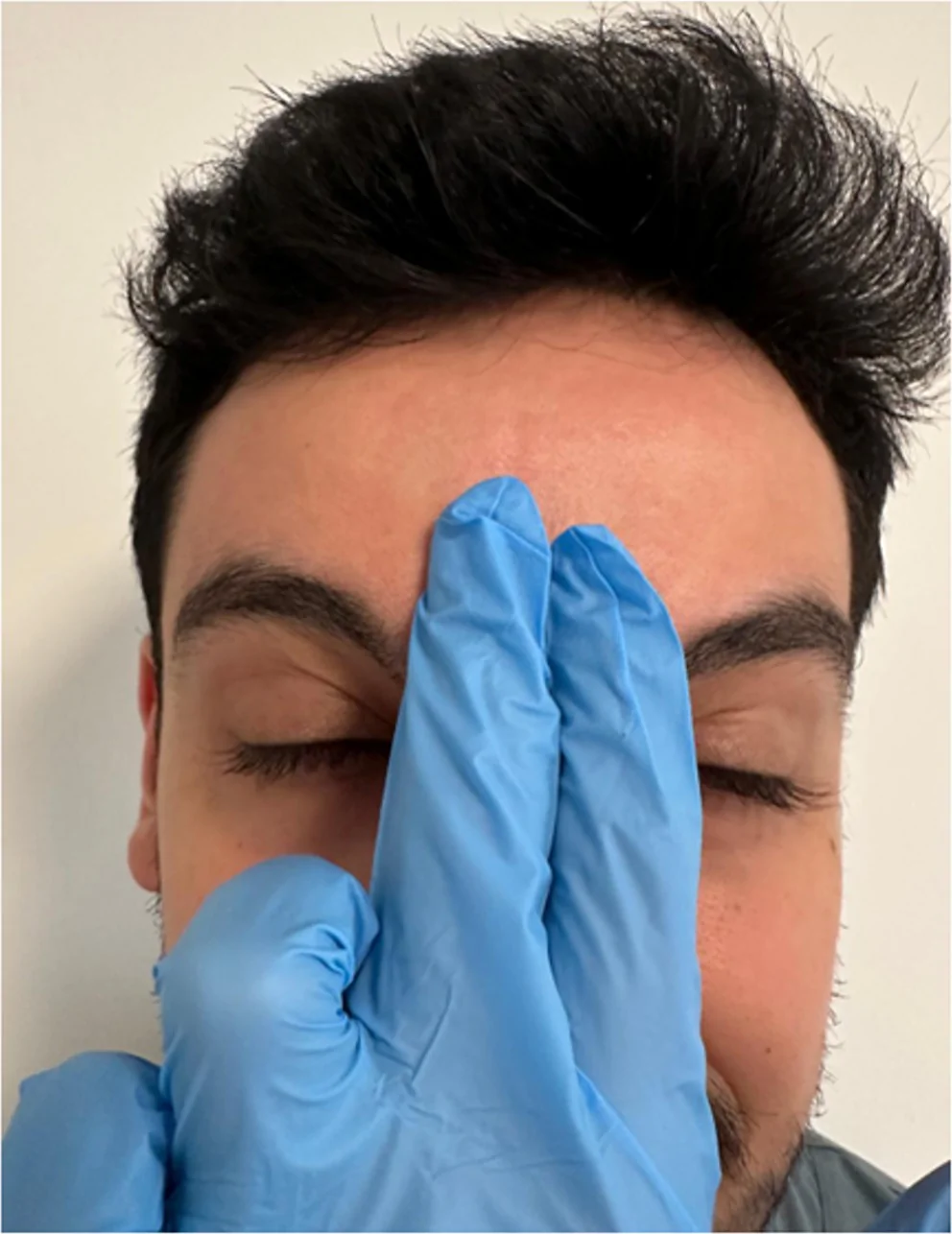
To anticipate the development of the Mephisto sign, we propose a noninvasive clinical maneuver. During examination, the physician gently blocks the patient's medial frontalis with a finger while asking the patient to elevate the eyebrows. A marked rise in the lateral brows under these conditions may indicate a higher tendency toward the Mephisto sign after injection (Figure 1 ). Conversely, absent or minimal lateral brow elevation during the same maneuver may suggest a lower‐risk pattern (Figure 2 ). This simple maneuver may serve as a practical adjunct to dynamic pre‐injection assessment and may help the clinician determine whether the lateral fibers should be specifically targeted during the procedure.
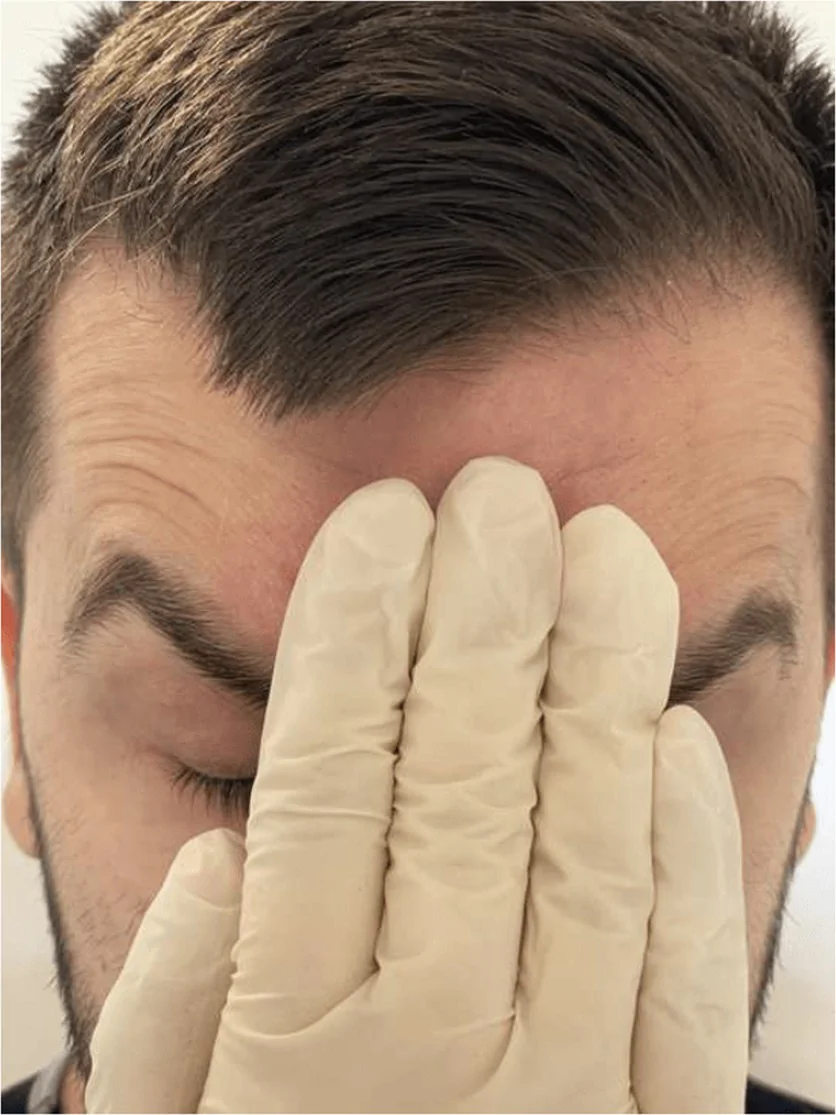
FIGURE 1 Demonstration of the proposed maneuver in a male patient. Manual blockade of the medial frontalis with fingertip pressure reveals a marked elevation of the lateral brow during attempted eyebrow raising, suggesting a higher tendency toward the development of the Mephisto sign.手法演示(男性患者):指尖按压阻断内侧额肌后,嘱其抬眉可见外侧眉明显上扬,提示注射后发生 Mephisto 征的倾向较高。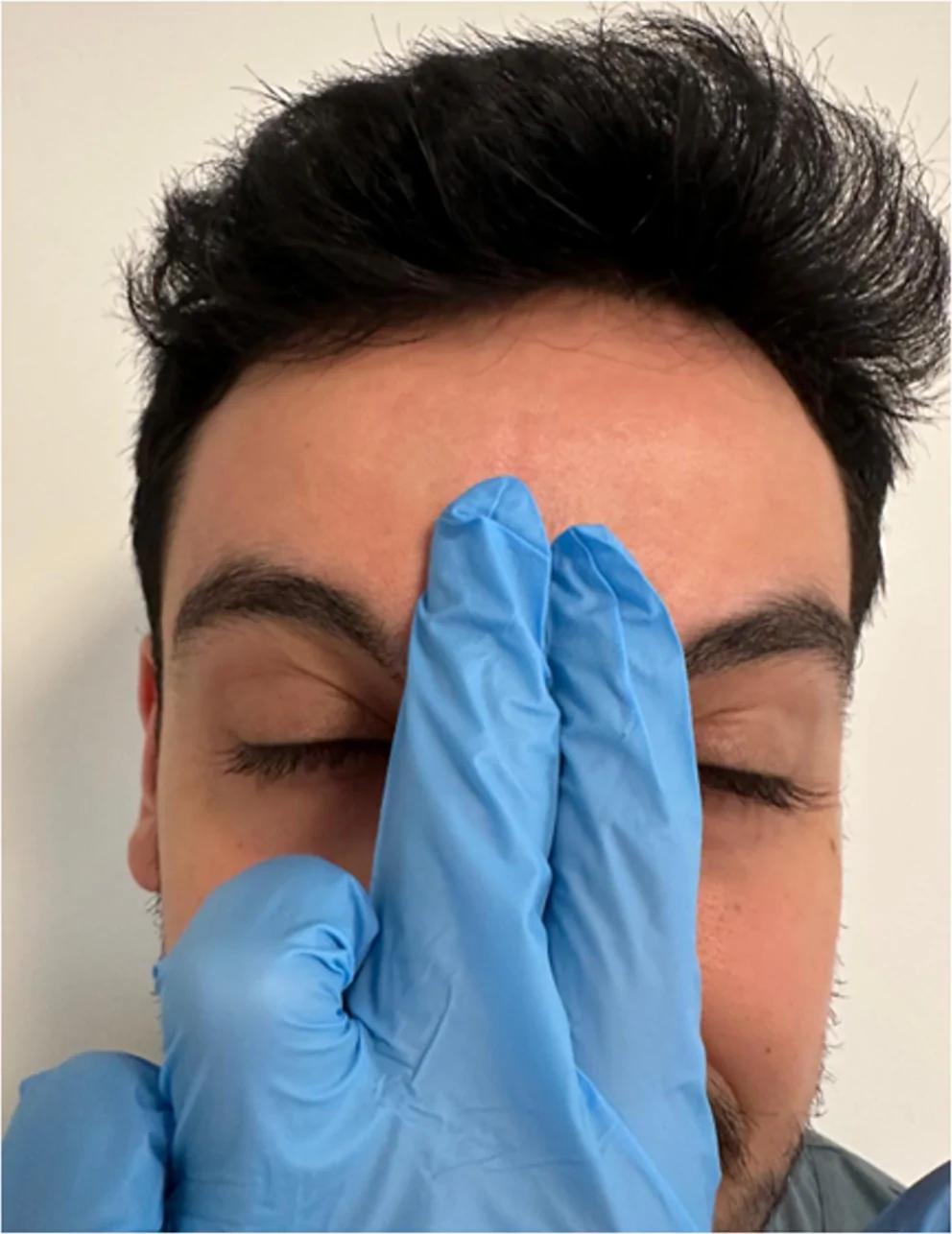
FIGURE 2 Demonstration of the proposed maneuver in a male patient with less prominent lateral frontalis activity. Manual blockade of the medial frontalis does not produce marked lateral brow elevation, suggesting a lower‐risk pattern for post‐injection lateral brow peaking.手法演示(另一男性患者,外侧额肌活动较弱):同样阻断内侧额肌后外侧眉无明显上抬,提示风险较低的类型。This approach may offer several advantages: it may reduce the risk of post‐injection complications, increase patient satisfaction, and minimize the need for corrective treatments. It is intended to complement, rather than replace, comprehensive pre‐injection evaluation of facial anatomy, dynamic muscle activity, and patient expectations. Furthermore, the maneuver is easy to perform, cost‐free, and can be readily applied in any clinical setting. It may be especially valuable in first‐time botulinum toxin patients, providing preliminary insight into individual muscle dynamics before treatment planning.
In conclusion, success in botulinum toxin applications for aesthetic dermatology depends not only on the technical aspects of injection and dosage but also on tailoring the approach to individual muscle architecture. The proposed pre‐injection maneuver may offer practical predictive value for the occurrence of the Mephisto sign and contributes to a more personalized treatment strategy. Adoption of this method may facilitate more predictable, safe, and aesthetically satisfying outcomes in botulinum toxin procedures.
The authors have nothing to report.
This article does not involve animal or interventional human research requiring institutional review board approval.
Written informed consent was obtained from the patient for publication of clinical details and accompanying images.
The authors declare no conflicts of interest.
为什么值得看: Mephisto 征是额部肉毒毒素治疗后常见却常被低估的『表情失真』。常规做法是在外侧额肌预防性补点小剂量,但额肌内外侧优势的个体差异很大(额部高度、基础眉位、额肌力量、性别相关解剖均有影响),统一配方难以覆盖所有人。本文给出的是一个零成本、可在术前 30 秒完成的动态筛查动作。
可操作性: 流程为——① 坐位、放松额部;② 检查者指腹横向压住眉弓上方内侧额肌(约瞳孔中线以内);③ 嘱患者用力抬眉;④ 观察外侧眉尾的上扬幅度。外侧眉上扬明显者,本次方案应明确包含外侧额肌的针对性处理,并适当调整内侧剂量与眉间注射的弥散控制。
循证边界: 该手法属经验性描述,缺乏前瞻性对照、量化阈值与观察者一致性数据,应视为『辅助判断』而非独立决策依据。它也不能替代完整的注射前动态评估(含眉位、额肌代偿、上睑提肌功能、既往注射史)。
沟通要点: 向求美者说明表情调整是渐进、可修正的过程,术后 2 周复评、按需微调是标准流程;表述上应保持中性、留有余地,如实说明个体差异与修正注射的可能性。
声明:中文精读 · 仅供学术参考。内容来自公开文献检索,不代表本人观点,不构成诊疗建议。 医疗美容需在正规医疗机构由执业医师实施。
基于相同主题推荐 · 继续深挖
背景:肉毒毒素是额纹、眉间纹与眶周纹的常用治疗,但注射后并发症会造成外观不满。Mephisto 征(『恶魔征』)指额部注射后双侧眉毛外1/3异常上扬,形成『惊讶/凶相』面容。
背景与方法:下面部颏肌(MT)、降口角肌(DAO)、颈阔肌(PL)功能复杂、相互重叠,BoNT-A 治疗风险高。14 位意大利专家经三轮德尔菲(数字问卷 + 正式会议)达成下面部共
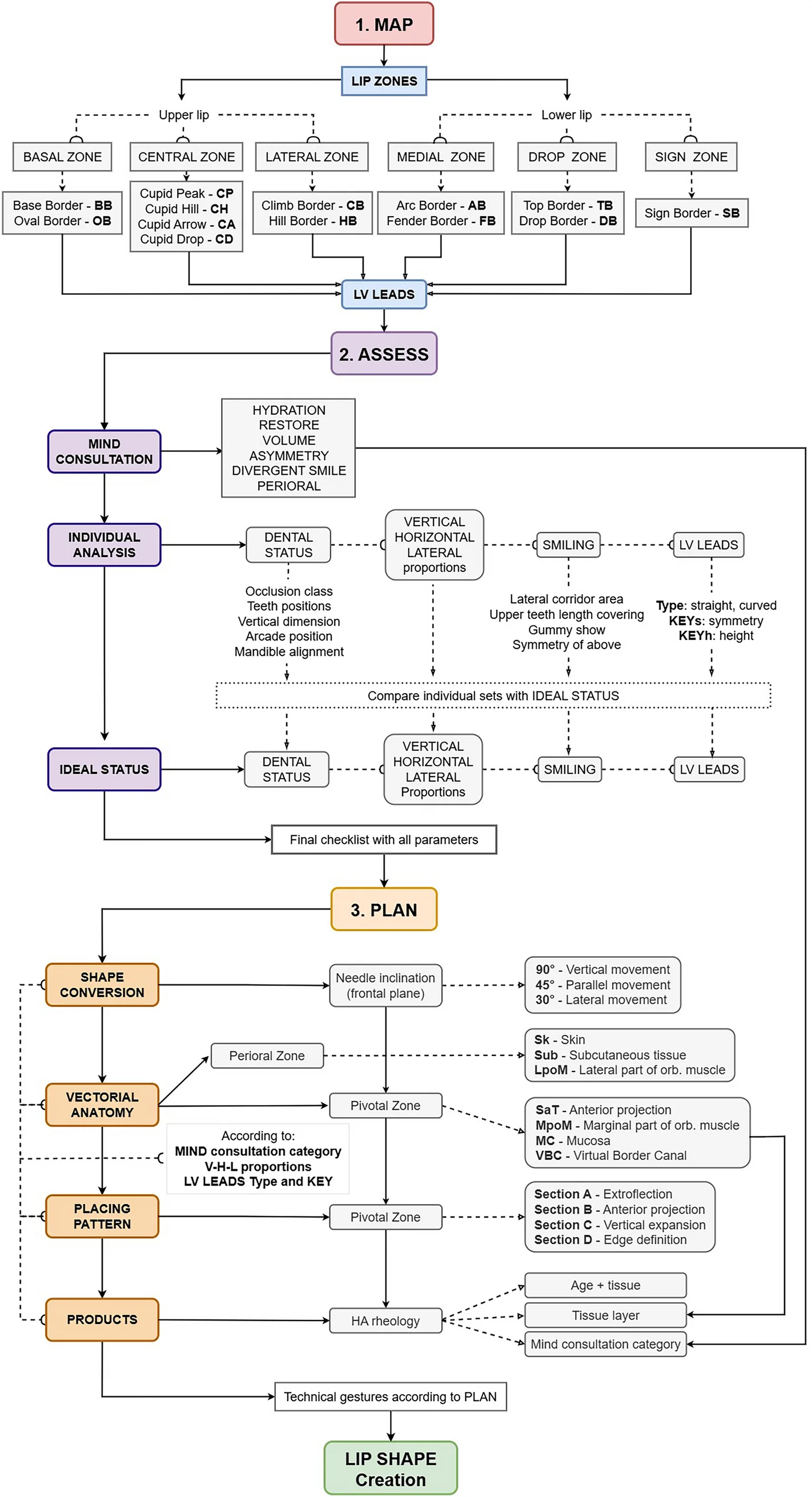
背景:透明质酸(HA)注射唇部美学需求广泛,但个体解剖与诉求差异大,缺乏可编码、可复现的唇部分析与治疗规划框架。