HA与PLLA复合凝胶韧带靶向注射矫正鼻唇沟
2026年9月3日19 min read
Plastic and Reconstructive Surgery Global Open
Background:Nasolabial folds (NLFs) significantly impact facial aesthetics. A novel filler combining cross-linked sodium hyaluronate with poly-L-lactic acid-b-polyethylene glycol microspheres (PLLA-b-PEG/HA) has shown potential. This study evaluated the efficacy and safety of the PLLA-b-PEG/HA filler for NLF correction with an innovative ligament-targeted injection technique.
Methods:This retrospective study was reported in accordance with Strengthening the Reporting of Observational Studies in Epidemiology (STROBE) guidelines. Thirteen participants presenting with mild to severe bilateral NLFs (WSRS scores 2-4), were examined between December 2022 and February 2023. Treatment involved injections of PLLA-b-PEG/HA at the temporal, preauricular, zygomatic, and mandibular ligaments. Efficacy was assessed via the WSRS, Global Aesthetic Improvement Scale, FACE-Q satisfaction with cheeks scale, and participants’ satisfaction during a 12-month follow-up period.
Results:At the 12 months, a statistically significant improvement was observed in the mean WSRS score, which decreased from 3.00 ± 0.71 to 1.85 ± 0.90 ( P < 0.05), with a response rate of 84.62%. The improvement was sustained through the 12-month period. Significant enhancements were also noted in both the FACE-Q and Global Aesthetic Improvement Scale scores at each posttreatment follow-up visit, with participants reporting high levels of satisfaction. The PLLA-b-PEG/HA filler demonstrated an acceptable safety profile, with only 1 case of transient mild erythema and edema reported.
Conclusions:These preliminary findings suggest that the PLLA-b-PEG/HA filler, combined with a ligament-targeted injection technique, shows promising efficacy and a favorable safety profile for NLF correction over 12 months.
Nasolabial folds (NLFs) are a common aesthetic concern and a significant marker of facial aging. 1 Common treatment options include thread lifts, 2 surgical approaches, energy-based interventions, and dermal fillers such as hyaluronic acid (HA), calcium hydroxylapatite, 3 and poly-l-lactic acid (PLLA). 4
Cross-linked HA fillers are among the most popular nonsurgical treatments for NLF correction worldwide. However, their effects are temporary, as HA is gradually metabolized, necessitating repeated treatments to maintain results. This limitation has driven interest in biostimulatory fillers such as PLLA, a biocompatible and biodegradable polymer that promotes fibrous tissue regeneration for more sustained outcomes. 4 Despite its durability, traditional PLLA formulations have been associated with adverse events such as nodule formation, which may arise from a pronounced foreign body response. 5
To mitigate the risks, the PLLA microspheres used in this study were modified with polyethylene glycol (PLLA-b-PEG). This modification enhances hydrophilicity and biocompatibility, modulating the host tissue response to encourage organized collagen regeneration and reduce complication rates. 6
In addition to the properties of the filler itself, the injection technique is also critical for optimal outcomes. Direct injections into the NLFs carry a higher risk due to the proximity of facial arteries, which can lead to vascular occlusion. 7 Therefore, an alternative ligament-targeted injection technique was used to avoid the potential risk. This technique targets key facial ligaments, including the temporal, preauricular, zygomatic, and mandibular ligaments, effectively firming and rejuvenating the tissues and improving the appearance of NLFs. Thus, the technique could contribute to an overall facial lift, 8 with NLF improvement comparable in effectiveness to conventional techniques. 9 This study retrospectively analyzed the efficacy and safety of the PLLA-b-PEG/HA filler for NLF correction using this multifocal, multilayer, ligament-targeted approach, aiming to provide a new therapeutic option for facial rejuvenation.
This retrospective study was reported in accordance with the Strengthening the Reporting of Observational Studies in Epidemiology (STROBE) guidelines. ( See appendix, Supplemental Digital Content 1 , which describes STROBE statement checklist for the study, https://links.lww.com/PRSGO/E696.) The study included 13 female participants treated with PLLA-b-PEG/HA filler (CureWhite; Imeik Technology Development Co., Ltd., Beijing, China) for NLF improvement at 2 private clinical centers in China between December 2022 and February 2023, all of whom provided written informed consent before treatment in adherence with the Declaration of Helsinki. The procedures were performed as part of routine clinical practice, and all participants were financially responsible for their own treatment.
Healthy participants aged 18–65 years with bilateral NLFs rated as mild to severe (scores 2–4 on the Wrinkle Severity Rating Scale [WSRS], as assessed by the treating investigator) and who voluntarily provided informed consent were considered eligible. Exclusion criteria included pregnancy or lactation; known hypersensitivity to HA, PLLA, lactic acid, polyethylene glycol, or lidocaine-based topical anesthetics; preexisting or active autoimmune diseases; ongoing immunosuppressive or modulating agent therapy; active skin infections; abnormal coagulation mechanisms; or a history of keloid scarring.
The ligament-targeted injection technique was developed based on established principles of using fillers of supporting facial retaining ligaments to achieve a lifting effect. 10 , 11 Before the procedure, the face is cleansed, photographed, and disinfected with iodophor. The injection strategy was developed for each participant based on a comprehensive facial assessment. The injection volume was tailored to the individual, primarily determined by the severity of NLFs, including the degree of volume loss and ligamentous laxity. For participants with midface volume deflation, injections were concentrated at the zygomatic ligament points. For lower face sagging, injections targeted the temporal, preauricular, and mandibular ligaments. Ligaments were identified using palpable bony and soft-tissue landmarks. 10 The injections follow a methodical approach, progressing from top to bottom and deep to superficial layers, to optimize aesthetic results and ensure procedural safety.
For subcutaneous injections targeting the temporal, preauricular, and masseteric parotid cutaneous ligaments, initial entry points were created using a 27G sharp needle. Subsequently, a 23G blunt-tip microcannula was introduced to inject the filler in the temporal ligament area, whereas a 25G blunt-tip microcannula was used for the preauricular and masseteric parotid cutaneous ligament areas. The filler was administered in the subcutaneous fat layer using a linear threading technique, distributing a total volume of 1–2 mL per side through multiple threads, each approximately 3–5 cm in length.
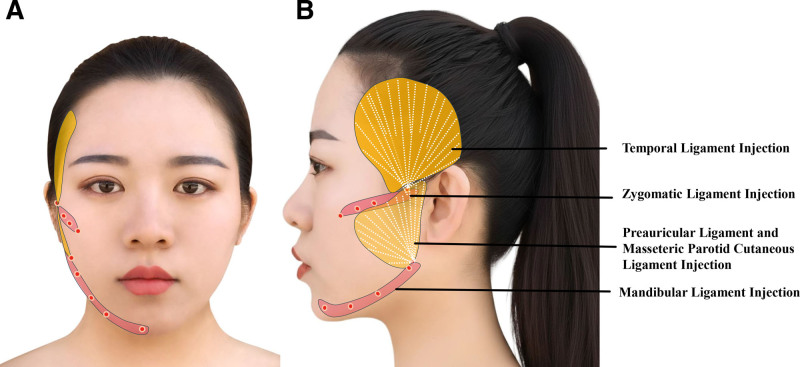
For injections targeting the zygomatic and mandibular ligaments, 27G needle injections were administered. At the inferior edge of the zygomatic arch, 3–4 points were injected, and at the mandibular margin, 4–5 points were injected. These injections were delivered directly onto the periosteum, with a volume of less than 0.1 mL per point. Figure 1 illustrates the specific injection sites for both the cannula and needle techniques.
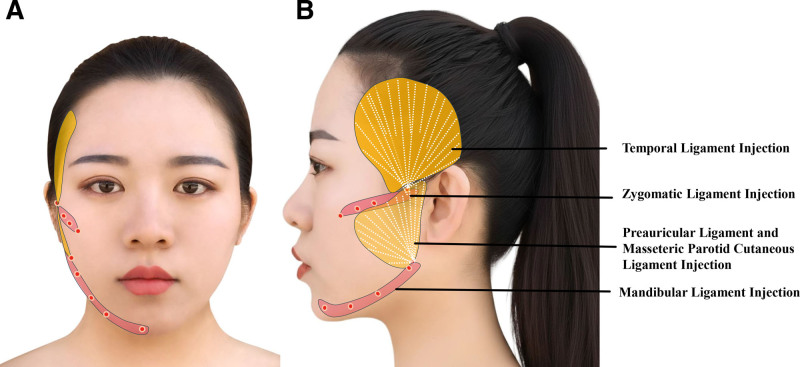
Fig. 1. Illustration of ligament-targeted injection sites using an artificial intelligence-generated model. A, Frontal view. B, Lateral views. Yellow areas indicate the temporal, preauricular, and masseteric parotid cutaneous ligaments, whereas red areas mark the mandibular and zygomatic ligaments.韧带靶向注射位点(AI 模型示意):黄色区为颞、耳前、颧、鼻唇等支持韧带区域。体现'打在支撑结构上'的布点逻辑。
Participants were followed up for 12 months posttreatment. The treating investigator used a digital single-lens reflex camera (EOS M6; Canon) to document each participant’s condition before the injection and at each subsequent follow-up visit. To ensure consistency, all participants were instructed to maintain the same position, angle, and camera settings for each photograph.
To mitigate potential bias, all efficacy assessments were conducted by a blinded evaluating investigator. The severity and correction of NLFs were assessed using the WSRS criteria and the corresponding illustrative guidelines. 12 An “effective” improvement was defined as a participant achieving a WSRS correction grade of 1 or higher on both sides compared with the baseline. The WSRS response rate was determined by the proportion of participants observing effective improvement.
Participants completed the validated FACE-Q satisfaction with cheeks scale before treatment and at 1, 3, 6, and 12 months posttreatment. Responses were scored on a Likert scale, ranging from “very dissatisfied” (1) to “very satisfied” (4). The overall responses were standardized to a Rasch-transformed summary score ranging from 0 to 100, where higher scores indicate greater satisfaction with appearance.
Both the evaluating investigator and participants used the Global Aesthetic Improvement Scale (GAIS) to assess aesthetic outcomes at 1, 3, 6, and 12 months posttreatment. The GAIS improvement rate was determined as the proportion of participants achieving scores between 1 (indicating exceptional improvement) and 3 (indicating slight improvement).
Satisfaction rates at each posttreatment visit were defined as the proportion of participants scoring 5 or higher on a 7-point satisfaction scale, indicating a level of comparative satisfaction or better. The investigator documented any posttreatment adverse events and their duration for safety assessment.
Statistical analyses were performed using SPSS Statistics for Windows, Version 27.0 (IBM Corp., Armonk, NY) by an independent statistician. Descriptive statistics were used for continuous variables. The Wilcoxon signed-rank test was used to evaluate intragroup differences in continuous outcomes both pretreatment and at 1, 3, 6, and 12 months posttreatment. Significance was defined as a P value less than 0.05. Additionally, paired t tests were conducted to compare FACE-Q scores before treatment and at subsequent follow-ups of 1, 3, 6, and 12 months. P values were computed using 2-sided tests, with the significance level set at 0.05. The sample size was determined by the number of eligible patients who received the specified treatment during the study period and for whom complete 12-month follow-up data were available.
The study included a total of 13 female participants, aged 22–45 years. All participants completed the 12-month follow-up with no missing data for the outcomes. The mean age was 32.2 ± 7.2 years. Three participants (23.1%) were assessed at severity level 2, 7 participants (53.8%) at level 3, and the remaining 3 (23.1%) at level 4, indicating a predominance of moderate wrinkle severity among the group. The average injection volume was 4.8 ± 2.3 mL, with individual doses ranging from 2.1 to 8.9 mL (Table 1 ).
Table 1. Demographic and Baseline Characteristics of Participants (n = 13)
| Characteristics | Value |
|---|---|
| Sex | |
| Female, n | 13 |
| Age, y | |
| Mean ± SD | 32.2 ± 7.2 |
| Range | 22–45 |
| Baseline WSRS score, n (%) | |
| 1 | 0 (0.0) |
| 2 | 3 (23.1) |
| 3 | 7 (53.8) |
| 4 | 3 (23.1) |
| 5 | 0 (0.0) |
| Injection dose, mL | |
| Mean ± SD | 4.8 ± 2.3 |
| Range | 2.1–8.9 |
The initial WSRS response rates were 92.31% (12 of 13) at both 1 and 3 months posttreatment and slightly decreased to 84.62% (11 of 13) at 6 and 12 months, yet remained significantly effective (Table 2 ). The mean WSRS score significantly improved from a baseline of 3.00 ± 0.71 to 2.00 ± 0.66 ( P < 0.05) at 1-month posttreatment. The most notable improvement was observed 3 months posttreatment, with a mean score of 1.54 ± 0.66 ( P < 0.05) (Table 3 ). Furthermore, Figures 2 and 3 present 2 cases of the results achieved in this study, including photographs taken before treatment and 1, 3, 6, and 12 months posttreatment. The result demonstrated a marked improvement in the NLFs, with the effects being sustained not only at the 6-month follow-up but also remaining satisfactory at the 12-month follow-up (Tables 2 , 3 ).
Table 2. WSRS Response Rate
| Follow-up Time Point, mo | Response Rate, % (n/N) |
|---|---|
| 1 | 92.31 (12 of 13) |
| 3 | 92.31 (12 of 13) |
| 6 | 84.62 (11 of 13) |
| 12 | 84.62 (11 of 13) |
Table 3. Pre- and Posttreatment WSRS Score Improvement
| Time Point | Mean WSRS Score ± SD | Median WSRS Score |
|---|---|---|
| Pretreatment | 3.00 ± 0.71 | 3 |
| 1 mo posttreatment | 2.00 ± 0.66 * | 2 |
| 3 mo posttreatment | 1.54 ± 0.66 * | 1 |
| 6 mo posttreatment | 1.85 ± 0.90 * | 2 |
| 12 mo posttreatment | 1.85 ± 0.90 * | 2 |
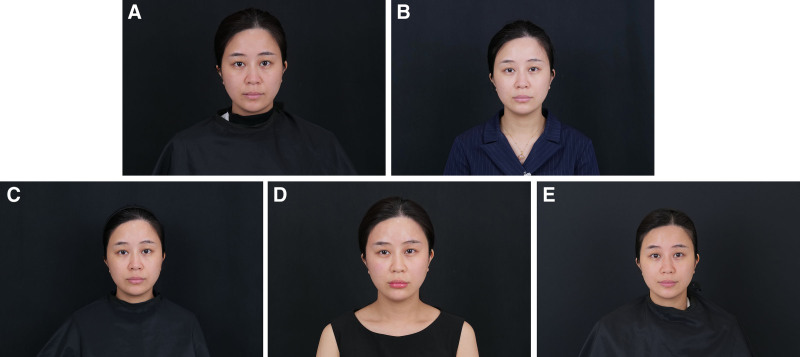
Fig. 2. Serial photographs of a 32-year-old woman demonstrating outcomes of NLF correction. A, Pretreatment NLFs. Posttreatment results are shown at 1 (B), 3 (C), 6 (D), and 12 (E) months. The WSRS score improved from 3 at baseline to 2 at 12 months posttreatment.32 岁女性 NLF 矫正序列照片:术前(A) 与术后 1(B)/3(C)/6(D)/12(E) 月。展示即时+中长期维持效果。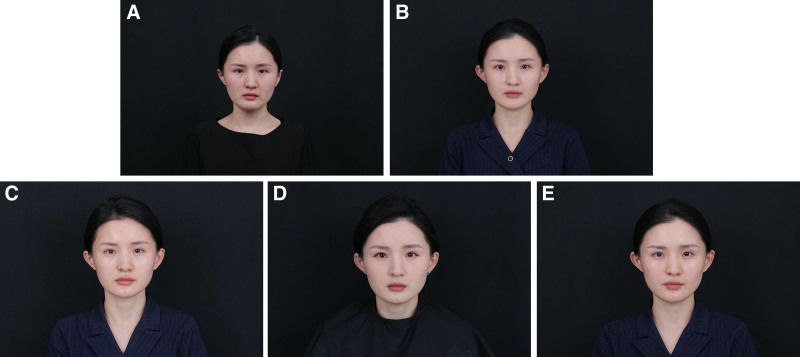
Fig. 3. Serial photographs of a 37-year-old woman demonstrating outcomes of NLF correction. A, Pretreatment NLFs. Posttreatment results are shown at 1 (B), 3 (C), 6 (D), and 12 (E) months. The WSRS score improved from 3 at baseline to 2 at 12 months posttreatment.37 岁女性 NLF 矫正序列照片:术前至术后 12 月。佐证复合凝胶在不同年龄个体的可重复性。
The mean score of FACE-Q with cheeks improved significantly from 40.15 ± 9.12 before injection to 70.85 ± 8.61 ( P < 0.01) and remained significantly higher than baseline, 12 months after treatment ( P < 0.01 at all time points) (Fig. 4 ). No significant differences were observed among the 1, 3, 6, and 12 months posttreatment assessments in the mean score of FACE-Q.
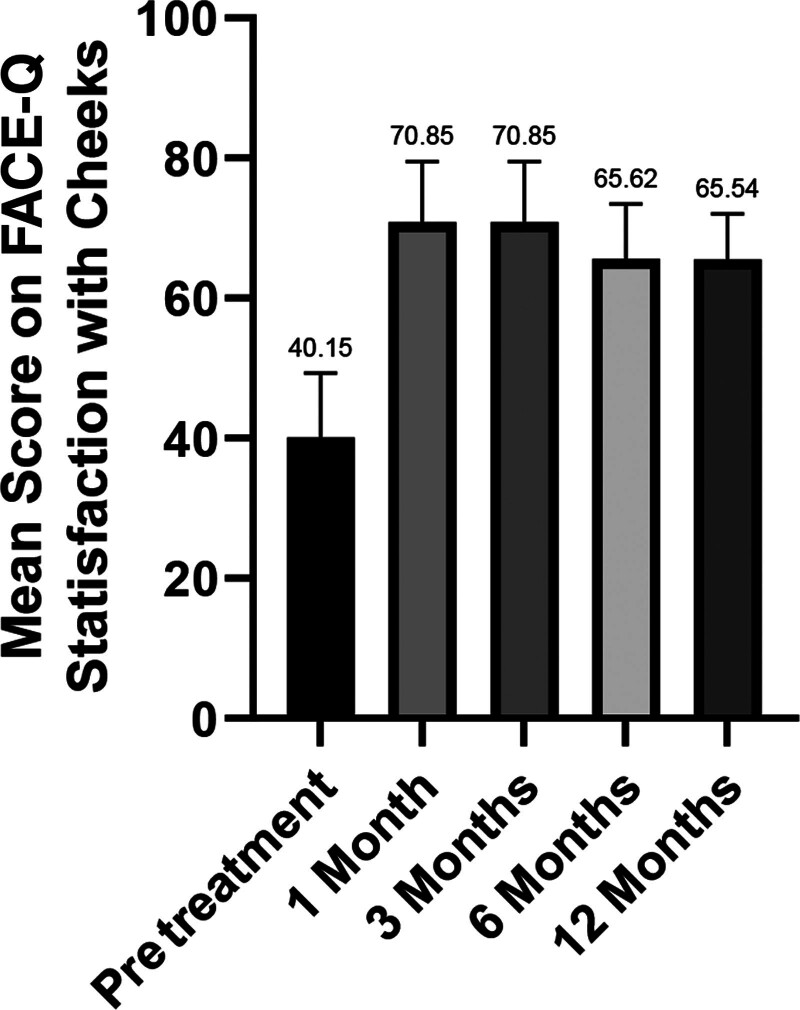
Fig. 4. Mean score of FACE-Q satisfaction with cheeks scale at pretreatment and 1, 3, 6, and 12 months after treatment. ***P < 0.001 compared with baseline (pretreatment).FACE-Q cheeks 满意度评分:术前与各随访点对比(***P<0.001)。量化受试者主观满意提升。
The GAIS was used to assess the degree of improvement by both the evaluating investigator and participants. The evaluating investigator reported a significant improvement rate of 100% at 1 and 3 months posttreatment and 92.31% and 84.62% at 6 and 12 months posttreatment, respectively. In terms of participants’ self-assessment using the GAIS, an improvement rate of 100% was observed at 1 and 3 months posttreatment and remained at 92.31% from 6 to 12 months posttreatment (Fig. 5 ).
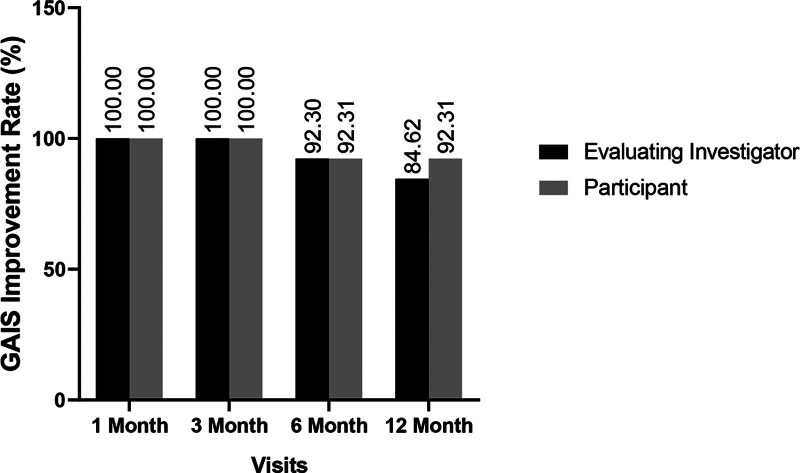
Fig. 5. Bar diagram showing the GAIS improvement rates in % for the evaluating investigator (black) and participant (gray).GAIS 改善率柱状图:研究者(黑)与受试者(灰)。双口径一致性支持疗效可信度。
The satisfaction rates of participants were 100%, 100%, 92.30%, and 84.62% on 1, 3, 6, and 12 months posttreatment, respectively. Although the overall trend showed a slight decrease at 6- and 12-month follow-ups, the overall satisfaction rate remained high.
To further explore the efficacy of the treatment in relation to aging, a descriptive analysis of older participants (≥35 y, n = 9) was conducted. Within this subgroup, the mean WSRS score improved from 3.22 ± 0.67 at baseline to 2.11 ± 0.78 at 12 months ( P < 0.05), and satisfaction rates were high (88.89%–100%) throughout the follow-up period. These results indicated that the treatment is also effective in patients with more established signs of facial aging.
No significant discomfort (eg, redness, bruising, pain, swelling, itching, or thrombus events) was reported throughout the treatment. One participant exhibited mild erythema and edema at the injection site, which resolved spontaneously within a week without any further intervention. No additional adverse reactions were observed during the follow-up period.
NLFs, commonly referred to as “smile lines,” are facial creases extending from the nostrils to the oral commissures. 13 The aging process exacerbates these folds through a complex interplay, including the loss of zygomatic and masseter ligamentous support, which reduces the elasticity of facial structures. 11 , 14
Our study used a refined, ligament-targeted injection technique that differs fundamentally from traditional methods where direct injection into the NLFs can risk an unnatural appearance or a wide midface. 15 The underlying mechanism of this technique is to address the anatomical causes of NLF by stabilizing lax retaining ligaments and counteracting the atrophy of the deep fat compartments. Injection into the temporal ligament creates tension and reorients the surrounding fibrous septa, resulting in repositioning and lifting of the midfacial soft tissues. 16 – 18 Additionally, injections into the zygomatic ligament elevate midfacial soft tissues, alleviating midface depression and enhancing overall facial lift. 8 The significant improvements in the FACE-Q scores confirmed that the ligament-targeted injection technique enhanced participants’ satisfaction with the appearance of their cheeks.
The ligament-target injection technique also demonstrated a favorable safety profile. During the study period, only 1 case of transient mild erythema and edema was reported, which recovered without intervention. No adverse reaction, such as swelling, vascular occlusion (thrombus), displacement, tissue necrosis, or blindness, was observed. This underscores the technique’s enhanced safety and reliability in clinical practice.
The choice of filling material plays a crucial role in the outcomes of facial augmentation. The PLLA-b-PEG/HA filler used in this study is a hybrid agent, strategically designed to provide both immediate and long-term correction. The cross-linked HA provides an immediate lifting effect and acts as a carrier for the PLLA-b-PEG microspheres, whereas the sustained efficacy observed at 12 months is attributed to the slow degradation of the PLLA-b-PEG component, which stimulates neocollagenesis. 19 – 22 This is supported by preclinical data showing that the microspheres are still present at 52 weeks, stimulating neocollagenesis responsible for the lasting, nonpermanent correction. 6
At 12 months posttreatment, the mean WSRS score for NLFs significantly decreased from an initial 3.00 ± 0.71 to 1.85 ± 0.90 ( P < 0.05), with a high WSRS response rate of 84.62%, demonstrating sustained aesthetic improvement. This efficacy is comparable to that of other fillers. A randomized, controlled trial of an HA filler reported a WSRS response rate of approximately 80% at 12 months. 23
Despite the strength of our study, there are several limitations. First, the study’s very small sample size (n = 13) limits the generalizability of our findings. Second, the inclusion of only female participants leads to a potential gender bias, and the results may not be applicable to male patients. Third, the retrospective nature of the study and the absence of a control group prevented a more comprehensive analysis.
In conclusion, the preliminary findings of this study suggest that the PLLA-b-PEG/HA filler, combined with the ligament-targeting injection technique, is a promising approach for the aesthetic improvement of NLFs with a favorable safety profile. However, given these limitations, future prospective, controlled studies with larger and more diverse cohorts are required to corroborate these findings.
Shiwei Wang, Muyan Zou, Jiaxu Wu, and Yinghan Ren are employees of Imeik Technology Development Co., Ltd, the manufacturer of the product used in this study. The other authors have no financial interest to declare in relation to the content of this article.
韧带靶向 vs 平铺: 传统 NLF 填充常把 HA 打在沟里'填坑',易移位、显形、扩散到上唇。本文'韧带靶向'把复合凝胶注在支持韧带周围(颧韧带、咬肌皮肤韧带等),靠结构支撑把沟'顶起来'而非'填进去'——这是更解剖学、更抗移位的思路,与'深层骨膜上/韧带支撑'流派一致。
HA+PLLA 复合的价值: HA 给即时容积,PLLA 微球给长期胶原刺激,理论上兼顾'立刻看得到'和'维持更久'。对不愿频繁补打的求美者友好。但 PLLA 有结节/肉芽肿风险,复合微球需严格均匀、避免堆积。
循证边界: 回顾性、单臂、无同期对照,长期(>12 月)数据有限;WSRS/FACE-Q 为主观量表。对我团队启发:NLF 矫正从'填沟'升级为'韧带支撑 + 复合制剂',但要控制单侧剂量、进针层次(深部/韧带周围)、并警惕 PLLA 迟发结节;对薄皮、动态丰富的个体保守为先。合规上亦避免夸大'单次显效、长期维持'的绝对化表述。
声明:中文精读 · 仅供学术参考。内容来自公开文献检索,不代表本人观点,不构成诊疗建议。 医疗美容需在正规医疗机构由执业医师实施。
基于相同主题推荐 · 继续深挖
背景:鼻唇沟(NLF)显著影响面部美学。一种交联透明质酸钠 + 聚乳酸-聚乙二醇微球(PLLA-b-PEG/HA) 的新型复合填充剂,兼具即时填充与长期胶原刺激。本文评估其韧带靶向
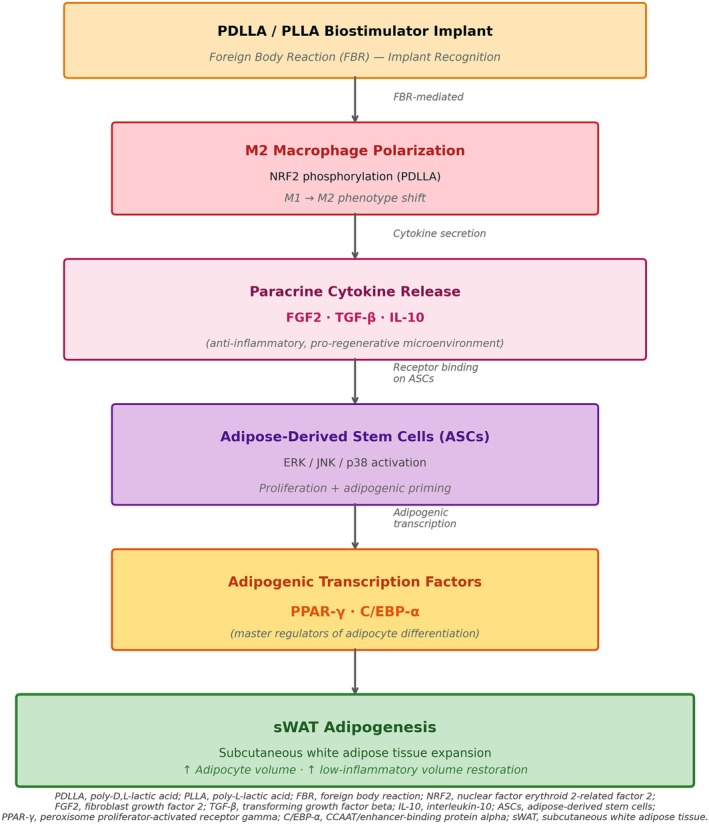
背景:GLP-1 受体激动剂减重常伴随“Ozempic Face”式面部容积流失与皮肤松弛,其力学机制为张力稳态崩溃;透明质酸(HA)填充剂以占位为主、储存模量(G′)偏低,难以持
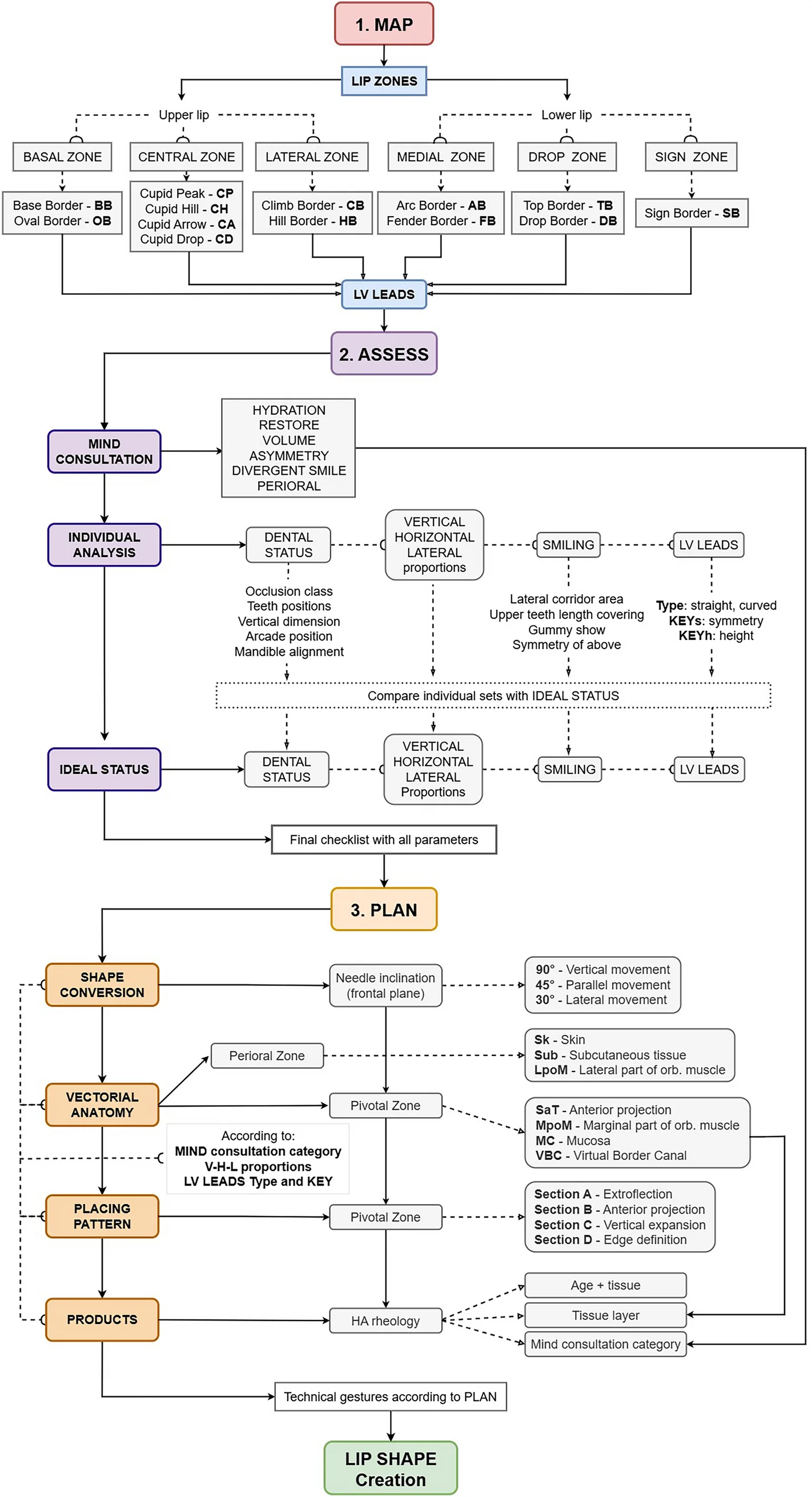
背景:透明质酸(HA)注射唇部美学需求广泛,但个体解剖与诉求差异大,缺乏可编码、可复现的唇部分析与治疗规划框架。