iLips®动态唇填充:5年高可重复性技术经验
2026年7月20日28 min read
Aesthetic Plastic Surgery · 2026
Authors: Marco Gratteri¹ · Pierluigi Gigliofiorito²,³ · Marco Palmesano⁴,⁵ · Luca Piombino⁶ · Mario D'Anna²,³ · Michele Guariglia²,³ · Lisa Lampis²,³ · Giovanni Francesco Marangi¹ · Valerio Cervelli⁵ · Paolo Persichetti¹
Journal: Aesthetic Plastic Surgery (2026) | DOI: 10.1007/s00266-026-05982-1
Background Migration is one of the most feared complications following lip filler. The use of a specific filler with a high degree of elasticity and cohesiveness could be the key to solve the problem if injections are performed in the correct anatomical plane. The purpose of this study was to describe the authors' 5-year experience with a new concept of lip filling, iLips. This reproducible approach combines elasticity and cohesiveness of a 25,5 mg/ml filler injected through superficial micro-tunnels in a virtual space between orbicularis muscle and mucosa creating a tridimensional net that respects lip dynamic also leading to a low risk of filler migration.
Methods A total of 4583 consecutive patients who underwent lip filler with iLips technique were enrolled in this prospective study. An objective evaluation on the aesthetic results was obtained by a jury composed of 3 external plastic surgeons using Lip Fullness Merz scale. PROMs were investigated through FACE-Q administration to the patients ("Psychological function", "Satisfaction with outcome" and "Satisfaction with lips" scales). Statistical analysis was performed through Prism10. Complications were reported.
Results t-test with Welch's correction showed an improvement in Lip Fullness Merz score both in upper and lower lip (p<0.05). A similar trend was shown also for "Psychological function", "Satisfaction with outcome" and "Satisfaction with lips" mean values after the procedure. Just 2 cases of major vascular complications were reported.
Conclusion iLips® seem to be a safe, highly reproducible, effective and satisfying approach for lip augmentation positively impacting also the patient's psychological sphere.
Level of Evidence IV This journal requires that authors assign a level of evidence to each article.
Keywords Lip filler · Dynamic filler · Dermal filler · Lip augmentation · Filler migration
Whether an ideal of beauty could be universally accepted, this may regard lips [1]. Voluminous, shaped, smooth and soft lips may be considered not only attractive, but also youthful [2, 3]. With aging, lips lose their initial appearance becoming thinner due to a reduction in collagen and elastin [4]. Dermal fillers for lip enhancement, specifically Hyaluronic acid (HA), represent a valid and safe solution to achieve common beauty standards [5].
With an increasing trend of at least 4% from 2022 to 2023, ASPS statistic considers lip filler as one of the most frequent minimally invasive procedures in cosmetic medicine [6].
Nevertheless, the procedure is not risk-free. Major vascular complications and consequent lip necrosis are among the most fearsome ones [7]. Even filler migration is considered one of the most complained complications [8]. The use of a specific filler with peculiar rheological characteristics and the definition of a correct injection plane could be the key to solve and prevent these undesirable effects.
Following this vision, the purpose of this study was to describe the authors' 5-year experience with a new concept of dynamic lip filling, iLips [9]. This reproducible approach combines elasticity and cohesiveness of a 25,5 mg/ml filler injected through superficial and crossed micro-tunnels within a virtual space between orbicularis muscle and mucosa, creating a tridimensional HA net that respects lip dynamic with a low risk of filler migration. The approach results from a combination of different vertical and horizontal injection techniques that the authors have put together to provide practical guidance on the main steps that injectors can follow to potentially achieve an aesthetic result similar to the authors' one. Data and considerations regarding patient- and plastic surgeon-specific evaluations on the aesthetic results as well as complications were reported.
A total of 4583 consecutive patients who underwent lip augmentation with iLips technique within 5 years by the same team of plastic surgeons uniformed on the minimally-invasive technique were enrolled in this multicentric case series. Exclusion criteria for the study were: previous lip filler in the last 6 months, previous silicon or other permanent lip filler injections, concomitant other cosmetic procedures, lip tattoo in the last month, uncompensated major comorbidities, diagnosis of psychiatric disorders and of immunological diseases and lack of follow-up (minimum 2 months).
Of the initial 4583 patients, the final sample study was composed of 4312 patients as 271 patients were excluded because of lack of follow-up. Sociodemographic distribution and clinical characteristics of the sample study is illustrated in Table 1.
The average length of the follow-up period was 3,4 months (minimum 2 months, maximum 8 months). As in the authors' daily practice, each patient was asked to come back after two months. Complications were recorded during all the follow-up period, with special attention to filler migration occurrence (diagnosed by the injector through clinical examination and eventually through Ultrasound). Each patient signed a specific consent for research purposes and for photos publication. The study was conducted in accordance with local regulations, international standards of "Good Clinical Practice" in the European Community and the principles of the Declaration of Helsinki.
Table 1 Sociodemographic and clinical characteristics of the sample study (Total sample = 4312 patients)
| Sociodemographic / clinical | n | % | Sociodemographic / clinical | n | % |
|---|---|---|---|---|---|
| Age range | BMI | ||||
| < 35 | 3751 | 86,99 | < 30 | 3978 | 92,25 |
| ≥ 35 | 561 | 13,01 | ≥ 30 | 334 | 7,75 |
| Sex | Known allergies | ||||
| Male | 23 | 0,53 | Yes | 562 | 13,03 |
| Female | 4289 | 99,47 | No | 3750 | 86,97 |
| Marital status | Known dermatological condition | ||||
| Single/divorced | 3018 | 69,99 | Yes | 216 | 5,01 |
| Not single | 1294 | 30,01 | No | 4096 | 94,99 |
| Occupation | Hypertension | ||||
| Yes | 4199 | 97,38 | Yes | 138 | 3,20 |
| No | 113 | 2,62 | No | 4174 | 96,80 |
| Education | Diabetes mellitus | ||||
| Primary education | 10 | 0,23 | Yes | 191 | 4,43 |
| Higher education or degree | 4302 | 99,77 | No | 4121 | 95,57 |
| Smoking | Previous lip filler (>6 months before) | ||||
| Yes | 3321 | 77,02 | Yes | 3751 | 86,99 |
| No | 991 | 22,98 | No | 561 | 13,01 |
| Physical activity | Major complications with previous lip filler | ||||
| Yes | 3751 | 86,99 | Yes | 129 | 2,99 |
| No | 561 | 13,01 | No | 4183 | 97,01 |
The objective evaluation was determined by a jury composed of 3 independent plastic surgeons who were uninformed on the aim of this study, on the technique and on the usage of the Merz Lip Fullness Assessment Scale (MLFAS) [10]. This internationally validated scale provides a score ranging from 0 (minimal volume) to 4 (very significant volume) for volume evaluation in both upper and lower lip [10]. All the patients were evaluated by examination of standardized photos of the full face in frontal, oblique and lateral views. Photographs were obtained in the preoperative setting and immediately after the procedure. Position, facial expression, focal distance and camera settings were standardized. Patient age, sex and length of follow-up were also recorded for each patient. The images were presented on PowerPoint slides with each case lasting 30 seconds. The observers were asked to give a score for both upper and lower lip following the above-mentioned scale. An average of the three scores provided by the plastic surgeons was then calculated for each lip.
The subjective evaluation method consists of an anonymous FACE-Q [11] Aesthetic questionnaire administered to the patients in written form preoperatively and immediately after the procedure. Just 3 scales of this internationally validated questionnaire were chosen: "Psychological function", "Satisfaction with outcome" and "Satisfaction with lips". "Satisfaction with outcome" scale was administered just after the procedure following instruction provided by the Q-portfolio team. Each scale provides a total score for the single patient. This was converted using a RASCH [12] converting scale (provided by the Q-Portfolio team) in a score ranging from 0 to 100 for a better comparison of the results. The authors highlight that this internationally validated questionnaire administration is a routine procedure that they perform also for legal purposes for each injected patient, as well as photographic documentation.
All the data deriving from objective and subjective evaluation were noted in an Excel worksheet and then exported into PRISM 10 for a descriptive statistical analysis. Shapiro–Wilk test was used to determine the possible Gaussian distribution of the values. t-test with Welch's correction was performed to identify any possible significance in changes in MLFAS evaluation. t-test with Welch's correction was used with the same aim for two FACE-Q scales ("Psychological function" and "Satisfaction with lips").
The patient is assessed in an orthostatic position for a precise analysis of any possible asymmetry in both lips. Caution is exercised in visualising any areas where the labial artery appears to be more superficial (Video 1). Such areas, generally in the wet zone, should be avoided to reduce the risk of vascular complications. A topical anesthetic cream (20% Tetracaine + 5% Prilocaine + 5% Lidocaine) is applied for at least 10 minutes in order to reduce any discomfort. Photographs are taken and lips are then disinfected with an antiseptic alcohol-based solution. A syringe with 1 ml of 25,5 mg/ml cross-linked HA (Hyaluronic Acid) Belotero Intense lidocaine (Merz) is required.
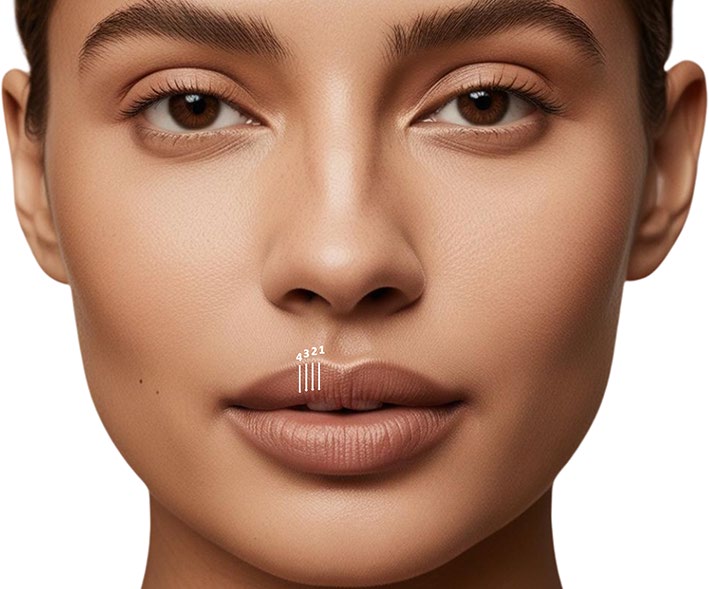
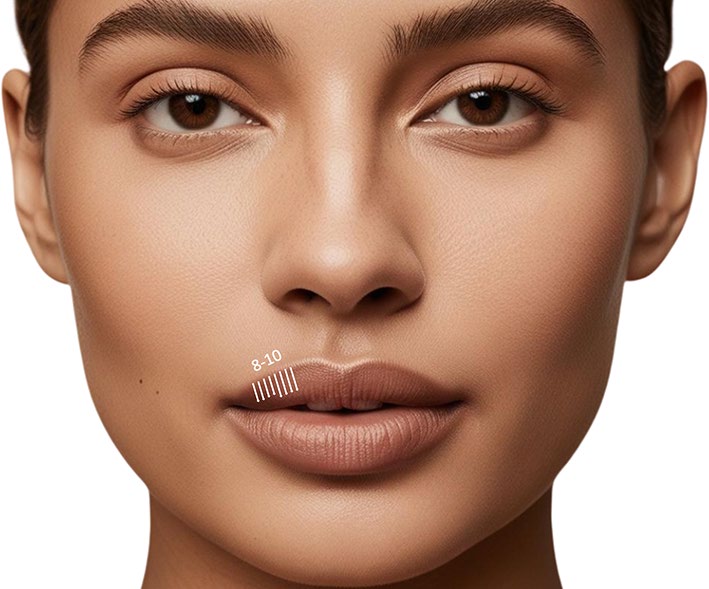
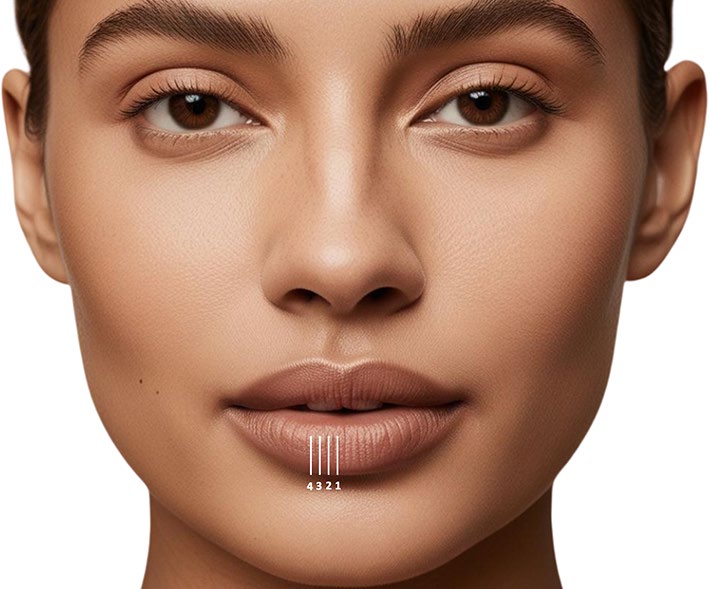
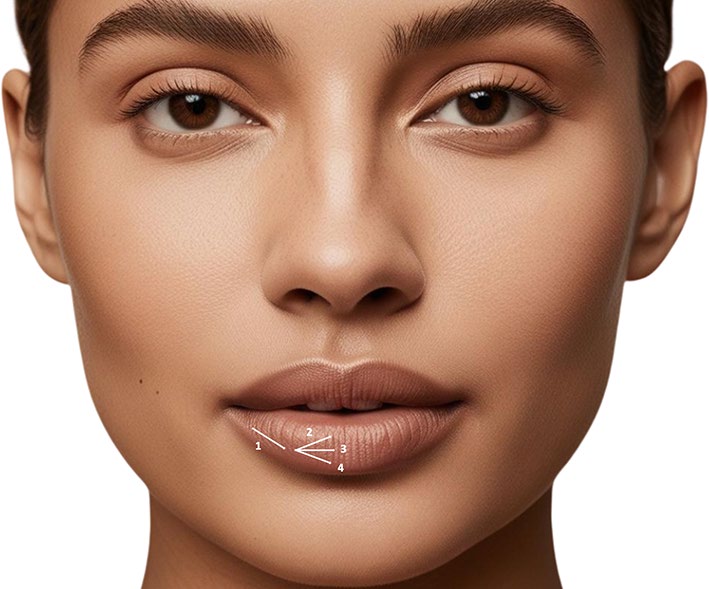
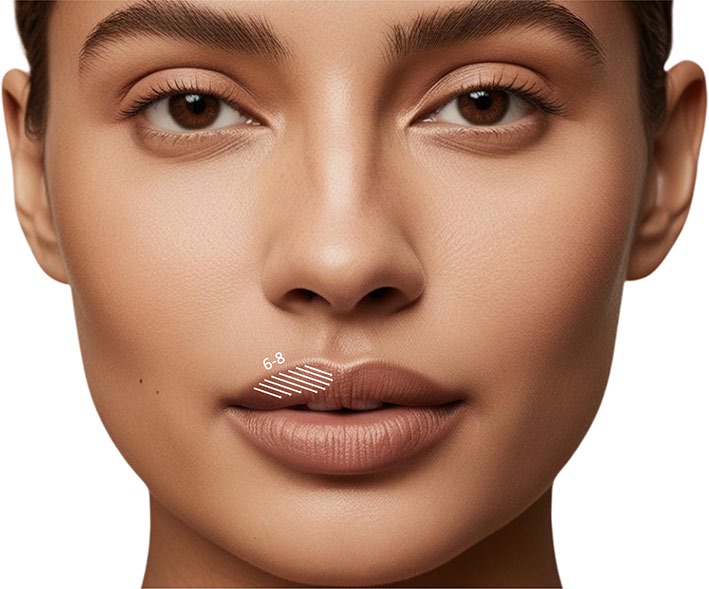
All the passages of the described technique are shown in Video 2. Patients are given dry ice at the end of the procedure and a glycosaminoglycano polysulphate (GAGPS)-based cream is prescribed to be used up to four times a day if bruising occurs [13]. A gentle massage is performed [14]. Patients are also asked not to eat or drink hot food in the following hours and not to perform intense sports [15].
In this case series 99,47% (4289) of the patients were women and just 0,53% (23) were men. The age ranged from 18 to 54 years. Specifically, 86,99% (3751) of the sample study was composed of patients younger than 35 years old, while just 13,01% (561) patients were older or equal to 35. Average injected volume was 0.85±0.13 cc with a range from 0.65 to 1cc.
Subjective evaluation based on FACE-Q showed a high satisfaction with the iLips approach (Figs. 6A, 6B, SDC 1, 2, 3 and 4). Specifically, the mean value of the "Satisfaction with lips" scale rose from 55,18±11,38 to 87,21±11,65. A similar trend is shown with the "Psychological function" scale, in which mean value tended to rise from 77,74±16,88 in the preoperative setting to 86,06±10,45 immediately after the procedure. This trend data may be confirmed by the high result obtained by the "Satisfaction with outcome" scale. This was the only scale administered just in the postoperative setting (due to the nature of the questionnaire).
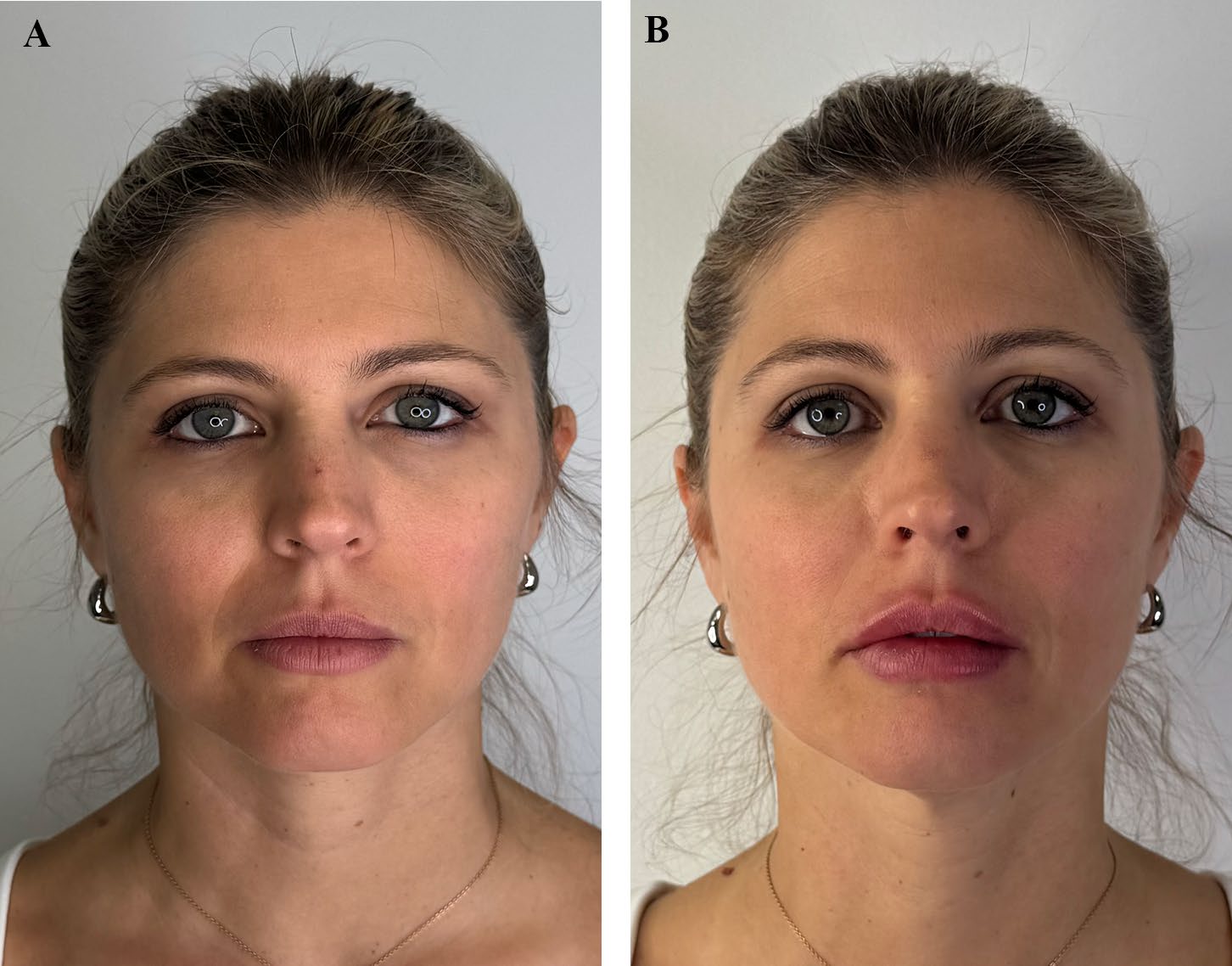
Focusing on the objective evaluation (MLFAS), in all the cases the starting score rose after the procedure for both upper (preoperative minimum value 0 - postoperative minimum value 2) and lower (preoperative minimum value 1 - postoperative minimum value 2) lips.
The other data deriving from patients and surgeons administration of the questionnaire are illustrated in Table 2.
Table 2 Data deriving from objective (MLFAS - Merz Lip Fullness Aesthetic Scale) and subjective (FACE-Q Aesthetic) evaluations
| Investigated outcome | Minimum | Maximum | Mean | SD |
|---|---|---|---|---|
| Upper lip MLFAS (PRE) | 0 | 3 | 1,19 | 0,86 |
| Upper lip MLFAS (POST) | 2 | 4 | 3,37 | 0,55 |
| Lower lip MLFAS (PRE) | 1 | 4 | 2,19 | 0,86 |
| Lower lip MLFAS (POST) | 2 | 4 | 3,38 | 0,55 |
| Satisfaction with outcome FACE-Q (POST) | 52 | 100 | 79,23 | 15,12 |
| Satisfaction with lips FACE-Q (PRE) | 37 | 77 | 55,18 | 11,38 |
| Satisfaction with lips FACE-Q (POST) | 45 | 100 | 87,21 | 11,65 |
| Psychological function FACE-Q (PRE) | 30 | 100 | 77,74 | 16,88 |
| Psychological function FACE-Q (POST) | 71 | 100 | 86,06 | 10,45 |
t-test with Welch's correction was used to identify any possible statistically significant difference in both subjective and objective evaluations. The tests demonstrated that all the above-mentioned improvements were statistically significant with a p<0,05 (Table 3).
No lip necrosis was detected in this case series. Just 0,05% (2) of the patients experienced a major vascular complication. In one case, the HA was injected too deeply, probably into the labial artery or a nearby vessel. In this case, the injection of hyaluronidase in the previously injected site and in the rest of the lip (500 UI) prevented skin necrosis [16]. In the other case, a possible spasm of the labial artery, which initially caused one side of the lip to turn whitish, was observed. Subsequently, only with intense circular massage did it resolve spontaneously without the use of hyaluronidase. Filler migration was detected in 0,26% (11) of the cases, while two cases (0,05%) of allergic reaction was present in this series. No abscess and persistent swelling over 4 days was detected. Transient erythema (98,01%) was considered a physiological reaction to the injection as well as transient swelling (99,69%). Nine (0,21%) herpetic outbreaks were evidenced in patients who already had this kind of condition. Just three cases (0,07%) of lip discoloration/Tyndall effect were reported. The authors recurred to Hyaluronidase injection in just 8 patients (0,19%) (Table 4).
Voluminous, smooth and soft lips may be considered a universally accepted beauty standard [1, 3]. With aging, lips become thinner due to a reduction in collagen and elastin [4]. In the past, the use of permanent silicone fillers seemed to be a solution to the problem [17]. Nowadays a "new" variety of lip augmentation techniques with a lower rate of complications is available [18]. This includes both surgical and non-surgical procedures as: non-filling surgery (lip lift or mucosal advancement [19]) and surgical or non-surgical filling procedures (injectable absorbable fillers, fat grafting and permanent implants [5, 20, 21]). Despite the recent development and spread of indirect lip augmentation techniques, such as the "Cupid lift" described by Talei [22], HA injection seems to remain a valid and safe solution for lip augmentation. Furthermore, one of the dermal filler's advantages is the possibility of lip contouring and asymmetry correction [23]. The minimally-invasive procedure is relatively fast and safe, but not risk-free.
Pre-procedural objective examination and knowledge of anatomy are essential for trying to minimize the complication rate, especially vascular ones [15]. Compression and intravascular injection may potentially lead to ischemia and subsequent necrosis [24]. Ultrasound appears to be a valuable ally for pre-procedural study of the labial artery topographic anatomy [25]. Despite this, complications may occur even in experienced hands, and the promptly use of Hyaluronidase may be the key for resolving the problem [26, 27].
Filler migration is among the most troublesome complications for the patient, but also for the injector [28]. This seems to be due not only to the use of an incorrect injection plan, but also to the usage of a filler with rheological characteristics (cohesivity) that are not suitable for the dynamics of the area [29]. The orbicularis muscle is a very strong concentric muscle that continuously in daily life is contracted during chewing, but also during verbal and nonverbal speech [30].
Table 3 Descriptive statistical analysis results
| Compared set of values | Test | Significant (p<0,05)? |
|---|---|---|
| Upper lip MLFAS (PRE) vs Upper lip MLFAS (POST) | t-test with Welch's correction | Yes |
| Lower lip MLFAS (PRE) vs Lower lip MLFAS (POST) | t-test with Welch's correction | Yes |
| Satisfaction with lips FACE-Q (PRE) vs POST | t-test with Welch's correction | Yes |
| Psychological function FACE-Q (PRE) vs POST | t-test with Welch's correction | Yes |
Table 4 Complications
| Complication | n | % |
|---|---|---|
| Minor complications | ||
| Visible and/or palpable nodule/lump | 16 | 0,37 |
| Granulomatous foreign body reaction | 0 | 0 |
| Discolouration | 3 | 0,07 |
| Transient erythema (within 24 hours) | 4226 | 98,01 |
| Transient swelling (within 4 days) | 4299 | 99,69 |
| Herpetic outbreak | 9 | 0,21 |
| Asymmetries reported by the patient | 127 | 2,95 |
| Major complications | ||
| Filler migration | 11 | 0,26 |
| Visible and/or palpable mass | 0 | 0 |
| Angioedema/Allergic reaction | 2 | 0,05 |
| Abscess | 0 | 0 |
| Persistent erythema (over 24 hours) | 4 | 0,09 |
| Persistent swelling (over 4 days) | 0 | 0 |
| Major vascular complication | 2 | 0,05 |
| Lip necrosis | 0 | 0 |
Following this vision, intramuscular injection could be one of the causes of filler migration. The authors also point out that the orbicularis muscle may not be the only culprit given as other muscles have insertion points into this aesthetic unit and neighboring anatomical regions.
Since there is no universally accepted injection technique for lip augmentation with dermal fillers, the authors over the years attempted to create a standardized approach, which they named iLips. Based on their experience and on the anatomical concepts described by prestigious authors, the technique was planned in order to provide a low rate of complications while maintaining a high aesthetic quality standard in lip filling. For these reasons, the authors decided to report in this case series their 5-year experience with iLips in more than 4000 consecutive patients undergoing lip fillers by the same team unified on this standardized technique.
The approach the authors previously described is based on three main points:
The choice of 25.5 mg/ml cross-linked HA (Hyaluronic Acid) Belotero Intense lidocaine (Merz) with a high degree of elasticity [31] (ability of a material to return to its original shape after physical stimulus) and cohesiveness [32] (ability of a product subjected to external pressure not to disintegrate) is mandatory. A filler with a low degree of cohesiveness would tend more to diffuse. Specifically, if the filler would have low cohesiveness, after continuous and repeated physical action of the orbicularis and masticatory muscles, it could not return to the original shape obtained immediately after injection [33]. Belotero Intense is a BDDE (1,4-Butanediol Diglycidyl Ether) cross-linked filler with a polidensified cohesive matrix (CPM) [34]. The gel's lower HA density areas make it easier to inject and allow it to integrate smoothly into all dermal planes. The higher HA density areas allow the gel to create more structural support and, once injected into the right dermal plane, make it more durable [34, 35].
Another aspect that the injector must take into account when using the above-mentioned HA is the "swelling factor". This describes the ability of the HA to expand as it binds water while still maintaining a single phase in vitro [31]. In other words, it is an indication of the degree of the gel's hydration. Belotero Intense has a swelling factor of intermediate degree. Consequently, the injector has to expect and explain to the patient a possible reduction of up to 20% in volume after one week compared to the immediate result. This may be due not only to the swelling factor, but also to the traumatism associated with the various micro-tunnels created during injections.
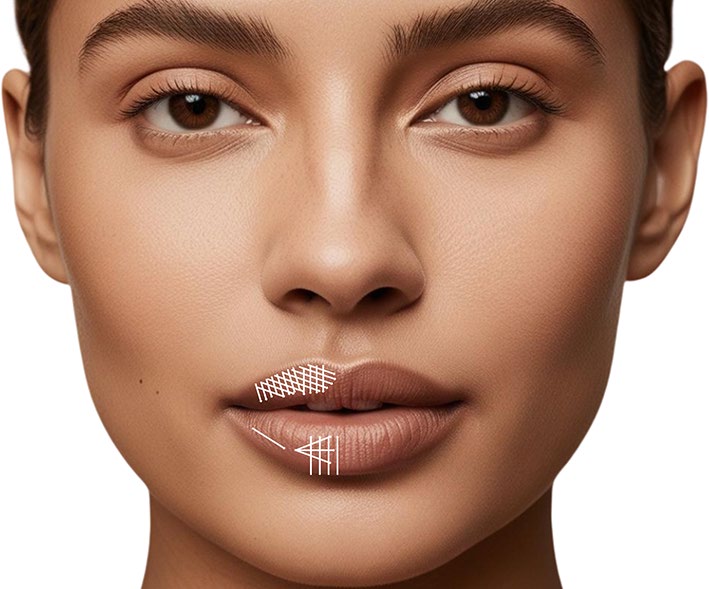
The choice not to perform boli, but to take advantage of micro-tunnels to create vector lines, was justified by two factors: crossed micro-tunnels created by retrograde injections allow the design of an "elastic" structural network, and in addition, boli could be the basis of obvious and palpable asymmetries that would require Hyaluronidase injection.
The three-dimensional "elastic skeleton" (Fig. 7) potentially expands and contracts in synergy with lip dynamics emphasizing the modern concept of the "dynamic filler" which follows facial expressions [36]. In the modern era, social networks such as Instagram and TikTok have adopted the use of more and more videos and less photos [2]. Cosmetic medicine is also beginning to follow these concepts aiming to "design" lips that are aesthetic not only in photos, but also in videos when facial mimicking muscles are activated (Video 3). So, the aim of the filler is also to create natural results following the aesthetic units' movement in dynamic [37, 38].
Regarding the possibility of filler migrations, authors highlight another strength in the above-described approach: when injecting the filler between the muscle and the mucosa, this has a greater possibility to encounter an "exit obstacle" during smiling [39]. This is represented by a group of fibrous fibers as a "septum" connecting the vermilion to the orbicularis muscle. As previously mentioned, if HA is placed within the muscle, the contraction of the orbicularis muscle would give a push and subsequent filler migration upward [40]. In this case, as there is no longer this natural barrier filtering the product, the HA would migrate onto the prolabium creating an anti-aesthetic effect (swollen prolabium) [41]. These concepts were already described by prestigious authors in scientific literature [3, 8, 18]. Other areas to be avoided for vascular reasons are labial commissures and wet zone [8]. Specifically, the risk of submucosal accumulation on the wet side of the lip is high [42].
iLips does not neglect its primary aim leading to a very satisfactory aesthetic result for the patient (Video 4). As it is illustrated in SDC 5, the average values of the FACE-Q "Satisfaction with lips" tended to increase immediately after the procedure [43]. The trend is similar for "Psychological function", also demonstrating the psychological power of this technique that leads patients to appreciate themselves more and feel better about themselves [44]. The only scale of the FACE-Q that was administered just in the postoperative setting was "Satisfaction with outcome." This scale also showed a very high score and higher scores reflect better outcomes.
Objective evaluation by the jury of plastic surgeons outside the team also demonstrated the effectiveness of the described approach in increasing lip volume (SDC 6).
Focusing on safety, no lip necrosis occurred in this case series. Major vascular complication rate was really low (0,05% of the patients). Also filler migration had a low occurrence rate (0,16%). Transient erythema, as well as transient swelling, was considered a physiological reaction to the procedure. All the three cases of lip discoloration/Tyndall effect were due to a too much superficial malpositioning of filler and required Hyaluronidase injections.
Strength of this study includes the multicentric setting, the use of an internationally validated questionnaire (FACE-Q), the use of an objective evaluation method for lip volume augmentation (MLFAS) and the huge sample of study. Major limitations are the brevity of follow-up and the administration of questionnaires only in the immediate postoperative period. Additional study directions may include increasing the study sample and follow-up period and comparison with other lip augmentation techniques. The authors emphasize that in this research they wanted to standardize the main steps of their approach and to describe and explain the main principles, derived from other researches and their experience, that they adopted in order to allow reproducibility of their approach with one specific HA filler they inject in daily practice. Nevertheless, the procedure should always be adapted to the specific clinical case as lips present highly distinctive morphological and functional characteristics—both in their active and involutive forms—regardless of temporary aesthetic requests from patients.
iLips seem to be a safe, reproducible, effective and satisfying approach for lip augmentation positively impacting the patient's psychological sphere.
📄 下载全文PDF
声明:中文精读 · 仅供学术参考。内容来自公开文献检索,不代表本人观点,不构成诊疗建议。 医疗美容需在正规医疗机构由执业医师实施。
基于相同主题推荐 · 继续深挖
2026/07/20 · 文献笔记 · 28 min read
4583例连续患者接受iLips动态唇填充(25.5 mg/ml交联HA Belotero Intense,于口轮匝肌与黏膜之间的虚拟空间内通过浅层交叉微隧道注射),5年多中心病例系列。上/下唇MLFAS丰满度评分及FACE-Q心理功能、满意度均显著改善(p<0.05);仅2例(0.05%)重大血管并发症,11例(0.26%)填充剂移位。结论:安全、可重复、有效、高满意度。
研究类型:系统综述联合单臂荟萃分析(遵循PRISMA,PROSPERO前瞻性注册),纳入11项研究共967例受试者,评估VYC-17.5L(Volift/Vollure,17.5

这项前瞻性、开放标签、随机、多中心(德国11个中心)上市后研究纳入121名受试者,按1:1随机接受 Belotero Volume(CPM-V,n=58)或含利多卡因的 CPM-V